
Workers’ Compensation Claims
Lawyer in California
Workplace Injury Lawyer
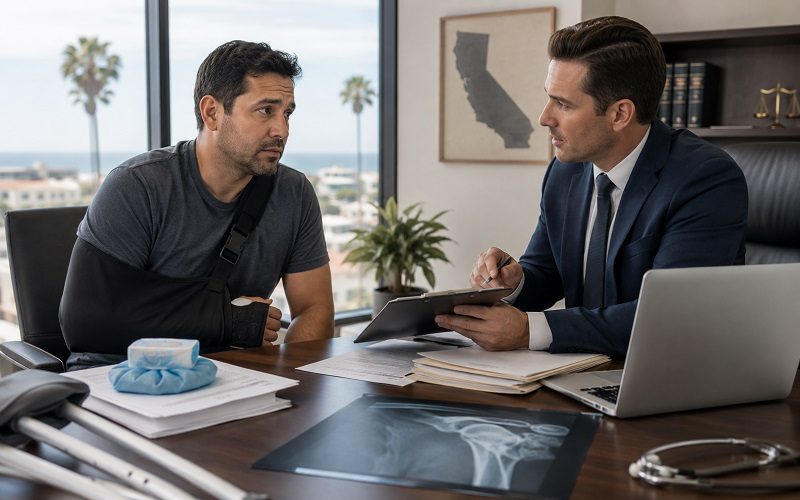
A workplace injury can create more than a medical problem. An employee may need treatment while also dealing with lost wages, work restrictions, insurance paperwork, and questions about whether the claim will be accepted. Problems can become more complicated when symptoms develop gradually or the insurance carrier disputes part of the injury.
A Workers’ Compensation Claims Lawyer can review how the injury happened, whether it was reported correctly, what medical evidence supports the claim, and how the claims administrator is handling available benefits. California Workers Comp Law Firm represents California employees dealing with workplace injuries, treatment disputes, disability issues, and denied workers’ compensation claims.
A Claim Begins With an Accurate Description of the Injury
California recognizes workplace injuries caused by a single incident as well as conditions that develop through repetitive traumatic activities over time. Labor Code §3208.1 refers to these as specific and cumulative injuries.
A specific injury may involve a fall from a ladder, machinery accident, vehicle collision, lifting incident, burn, or other event that can be connected to a particular date. A cumulative injury may develop after months or years of repetitive lifting, typing, gripping, bending, reaching, or other physically demanding work.
The injury report should reflect what actually happened. Describing months of worsening hand symptoms as one isolated incident, for example, can leave important information out of the record. Workers with repetitive hand and wrist symptoms may also need documentation relevant to a carpal tunnel syndrome claim.
A Workers’ Compensation Claim Attorney can examine whether the claim form, medical history, and job description tell a consistent story.
Reporting the Injury and Filing the DWC-1 Matter
California DWC advises employees to report workplace injuries as soon as possible. If a condition develops gradually, it should be reported when the employee learns or believes that the job caused it. DWC warns that failing to report an injury within 30 days can place benefits at risk, although notice issues depend on the facts.
After learning about an injury, the employer generally must provide or mail a DWC-1 workers’ compensation claim form within one working day. The employee completes the employee section, signs and dates the form, gives it to the employer, and keeps a copy.
Filing the DWC-1 formally starts the claim process and creates important rights. DWC states that appropriate medical treatment must be authorized within one working day after the employer receives the completed form, and up to $10,000 in medical treatment may be available while the claim is being investigated under applicable treatment guidelines.
A Workers’ Compensation Claims Lawyer can review the reporting timeline when the employer claims it did not receive notice or when important body parts were omitted from the original paperwork.
Medical Care Is a Central Part of Workers’ Compensation
California Labor Code §4600 requires an employer to provide medical treatment reasonably necessary to cure or relieve the effects of a compensable work injury.
Depending on the condition, treatment may include physician appointments, diagnostic testing, medication, physical therapy, specialist consultations, injections, surgery, or other medically appropriate care. The treating physician should understand both the injury and the physical demands of the employee’s actual job.
A construction employee, for example, may lift materials, climb ladders, work overhead, and operate tools. Those duties may be important when evaluating an injury covered by a construction workplace injury claim.
A Workers’ Compensation Benefits Lawyer can review treatment disputes when recommended care is delayed, modified, or denied. Disagreements about specific medical treatment can involve utilization review and, when applicable, independent medical review procedures.
Wage Benefits Depend on Medical Work Status
Workers’ compensation is intended not only to provide medical care but also to address certain wage losses caused by workplace injuries.
Temporary disability benefits may be available when the treating physician determines that an employee cannot perform the usual job while recovering. California DWC explains that temporary disability generally replaces two-thirds of lost gross wages, subject to statutory minimums, maximums, and other eligibility requirements.
Permanent disability benefits can become relevant when an employee does not fully recover and is left with lasting impairment affecting the ability to earn a living. The amount depends on factors established under California workers’ compensation law, including the medical impairment rating and other statutory considerations.
A Workers’ Compensation Claims Lawyer can compare the medical reports with disability payments when benefits start late, stop unexpectedly, or do not appear to reflect the physician’s work-status findings.
Work Restrictions Must Describe What the Employee Can Actually Do
Returning to work is not simply a question of whether a doctor writes “light duty.” Restrictions may address lifting, bending, kneeling, repetitive hand use, overhead reaching, driving, prolonged standing, chemical exposure, or other activities.
Those limitations must be compared with the real duties offered by the employer.
An employee restricted from lifting may still be assigned to move supplies. Someone with a shoulder injury may be placed in a modified position that still requires overhead reaching. A worker with respiratory restrictions may be returned to an area containing fumes or dust.
California DWC explains that return-to-work decisions involve the treating physician, employer, claims administrator, injured employee, and attorney when one is involved. The physician needs accurate information about the worker’s usual duties and the work being offered during recovery.
A Workplace Injury Lawyer can review whether a modified assignment matches written medical restrictions.
Prior Medical Problems Do Not Automatically Decide the Claim
Claims administrators frequently review earlier medical records when an employee has previously received treatment for the same body part.
An earlier condition can be relevant, but it does not by itself establish the cause of a worker’s current symptoms or treatment needs. An employee may have worked without restrictions before a new accident and then experience increased pain, new neurological symptoms, additional treatment, or reduced physical ability afterward.
Evidence involving an aggravation of a pre-existing condition can include prior treatment records, new diagnostic findings, changes in symptoms, and medical opinions explaining what occurred after the workplace event.
The medical history should be complete rather than hiding an earlier condition or allowing the insurer to treat it as the only explanation for the current disability.
The Claims Administrator May Accept Only Part of the Case
A workers’ compensation claim is not always completely accepted or completely denied. An insurer may accept that an accident occurred while disputing a particular body part, diagnosis, period of disability, treatment request, or later symptom.
For example, a carrier may accept an initial back strain but dispute later radiating pain or diagnostic findings. Serious spinal symptoms may require further evaluation for conditions such as a herniated disc injury.
A Workers’ Comp Claims Attorney can compare the insurer’s position with accident reports, medical findings, diagnostic imaging, witness statements, job descriptions, and the worker’s treatment history.
The claim file should be reviewed as a whole rather than relying only on the first medical report or the employer’s brief description of the incident.
A Denied Claim Can Be Challenged
A denial means the claims administrator has taken the position that the injury is not covered by workers’ compensation. California DWC states that an injured worker has the right to challenge that decision.
Medical disputes concerning whether an injury is work-related may involve a qualified medical evaluator. When the employee has an attorney, the parties may sometimes use an agreed medical evaluator. Formal claim disputes can proceed before a workers’ compensation administrative law judge after the required documents are filed.
A Workers’ Compensation Claims Lawyer can review the denial letter, identify the reason given by the insurer, examine the evidence supporting the claim, and determine what procedural steps apply.
Deadlines are important. Labor Code §5405 generally establishes a one-year limitations period measured from specified events, including the date of injury, the expiration of certain disability-payment periods, or the last date certain medical benefits were furnished. The correct deadline depends on the individual claim.
Serious Injuries Require a Longer View of the Claim
Some workers recover and return to their usual jobs. Others are left with permanent restrictions, ongoing medical needs, or injuries that prevent them from returning to the same occupation.
Severe burns, spinal damage, traumatic brain injuries, amputations, paralysis, and multiple major injuries can raise long-term questions about permanent disability, future medical treatment, and work capacity.
Workers facing life-changing harm may need additional evidence relevant to a catastrophic workplace injury claim.
Medical records should document not only the diagnosis but also how the condition affects lifting, walking, sitting, concentration, repetitive movement, or other functions required for employment.
Evidence Should Be Preserved Throughout the Claim

Workers should keep copies of the DWC-1 form, accident reports, photographs, medical records, diagnostic results, work-status notes, benefit notices, and correspondence from the claims administrator.
Witness names, job descriptions, schedules, employer messages, and records showing the physical demands of the job can also become important.
A broader California workplace injury claim may involve several stages, from the first report through treatment, disability, return to work, medical evaluation, and eventual resolution. Documents that seem unimportant at the beginning may later help explain what happened.
Legal Review Can Keep the Claim Focused on the Evidence
A workers’ compensation file may contain conflicting accounts from the employee, employer, physician, and insurance carrier. Medical reports may omit important duties, while an accident report may fail to identify every injured body part.
A Workers’ Compensation Claims Lawyer can review the injury history, medical evidence, treatment decisions, disability payments, work restrictions, and insurer correspondence to determine what remains disputed.
California Workers Comp Law Firm assists employees with accepted and denied claims, medical-treatment problems, temporary and permanent disability issues, work restrictions, and proceedings involving disputed workplace injuries.
Contact California Workers Comp Law Firm to request a case evaluation and discuss the evidence affecting your California workers’ compensation claim.
Important Resources
- California recognizes both specific and cumulative workplace injuries. California Labor Code §3208.1
- Employers must provide medical treatment reasonably necessary to cure or relieve the effects of a compensable workplace injury. California Labor Code §4600
- California DWC explains injury reporting, medical treatment, wage-replacement benefits, and the workers’ compensation process. DWC Injured Worker Guidance
- California DWC explains how to complete and submit the DWC-1 workers’ compensation claim form. DWC How to File a Claim
- California DWC explains what workers can do when an insurance carrier denies a workers’ compensation claim. DWC Denied Claim Guidance
Reviewed by Attorney Mak
Workers’ Compensation Attorney
Attorney Mak reviews workers’ compensation content for California Workers Comp Law Firm. The firm assists California employees with workplace injuries, denied claims, medical treatment disputes, disability benefits, work restrictions, and other workers’ compensation matters.
Get A Free Consltation
Fill out the form below and one of our injury specialists will contact you shortly

