
Janitor Injury Attorney for Workplace Accident Claims
Janitor Injury Lawyer
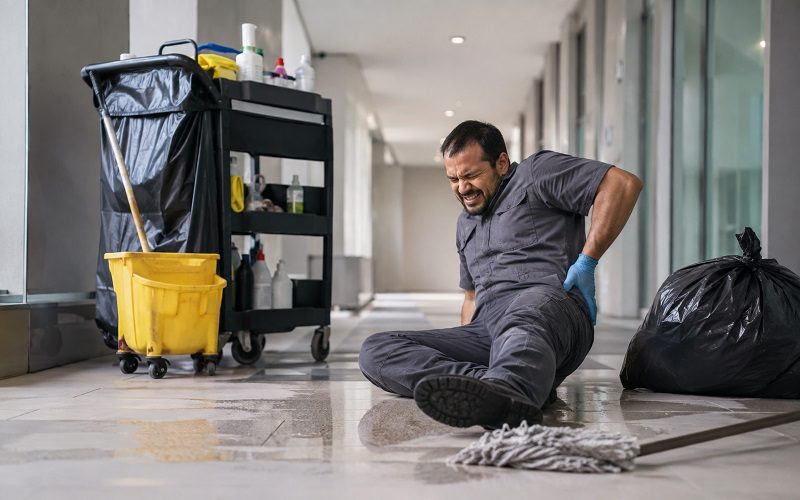
Janitors and maintenance employees play an essential role in keeping offices, schools, hospitals, hotels, apartment buildings, warehouses, and public facilities clean, functional, and safe. Their daily duties often include lifting heavy trash bags, using industrial cleaning chemicals, operating floor-care equipment, repairing fixtures, and working in areas where spills or uneven surfaces may create hazards. These demanding tasks can lead to sudden injuries from falls or equipment accidents, as well as gradual conditions caused by repeated lifting, bending, scrubbing, and gripping.
A Janitor Injury Lawyer can review how the job caused the condition, whether the medical record describes the employee’s duties, and which California workers’ compensation benefits may apply. California Workers Comp Law Firm assists cleaning and maintenance workers with delayed treatment and denied claims.
Routine Cleaning Work Can Lead to Serious Injuries
A worker may slip while mopping, fall from a ladder, be struck by a cart, suffer a cut from discarded glass, or strain the back. Damaged flooring, cluttered walkways, and leaking equipment can make routine work more dangerous.
Common claims involve back and neck strains, shoulder injuries, knee damage, fractures and wrist problems. Injuries involving a floor buffer, ladder, cart, or maintenance tool may also require guidance from a defective equipment lawyer.
OSHA identifies slips, trips, falls, chemical exposure, and ergonomic strain among cleaning-work hazards. Reaching, bending, pushing, pulling, and awkward positions can contribute to sprains and strains.
An Injury May Develop Suddenly or Over Time
California Labor Code §3208.1 recognizes specific and cumulative injuries. A specific injury results from one incident or exposure that causes disability or requires medical treatment. For a janitor, this could be a fall, sudden lift, electrical incident, chemical splash, or machinery accident.
A cumulative injury develops through repeated work. Mopping, vacuuming, lifting trash bags, wiping high surfaces, squeezing spray bottles, pushing carts, and operating vibrating equipment may gradually affect the back, shoulders, knees, wrists, or hands.
The medical record should explain the weight lifted, movements repeated, equipment used, shift length, and when symptoms began interfering with regular duties. Describing someone only as a “cleaner” may leave out important physical demands.
Cleaning Chemicals Can Cause Lasting Harm
Janitors may use disinfectants, degreasers, bleach products, floor strippers, drain cleaners, and solvents. Exposure may occur through vapors, skin or eye contact, or a splash, causing irritation, breathing problems, dermatitis, burns, or headaches.
California’s Hazard Communication Standard requires employers to provide information about hazardous chemicals through labels, safety data sheets, training, and a written program.
A worker with a corrosive injury can review information about a chemical burn injury claim. Long-term work around asbestos-containing materials or older building products may also raise issues discussed on the firm’s asbestos and chemical exposure page.
Workplace Records Can Support the Claim
Useful evidence may include incident reports, photographs, witness names, cleaning schedules, maintenance requests, supply labels, safety data sheets, equipment inspections, and security footage.
For a gradual injury, work schedules and treatment records can show whether symptoms improved away from work or required modified duties. A Janitor Injury Lawyer can compare these details with the employer’s report and medical history.
A previous back, knee, shoulder, or wrist condition does not automatically prevent benefits if work caused a new injury or materially worsened the earlier problem. More information is available about the aggravation of a pre-existing condition.
Reporting the Injury Starts the Claim Process
An employee should notify a supervisor, manager, or another person in authority promptly. California DWC guidance states that waiting more than 30 days to report a work injury may place benefits at risk. Gradual pain or illness should be reported once the worker believes the job caused or worsened it.
The employer generally must provide or mail a DWC-1 claim form within one working day after learning of an injury that causes lost time beyond the shift or requires treatment beyond first aid.
Within one working day after the completed form is filed, appropriate medical treatment must be authorized while the claim is investigated. Treatment before acceptance or denial is available up to a total of $10,000. A Janitor Injury Lawyer can address delays involving the claim form, appointments, testing, or authorization.
Work Restrictions Must Reflect the Real Job
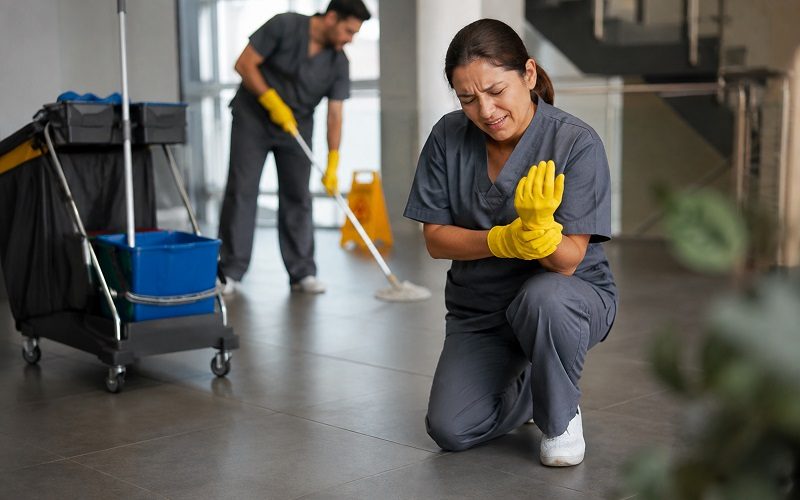
A treating physician may limit lifting, bending, kneeling, climbing, pushing, pulling, repetitive hand use, chemical exposure, or prolonged standing. The doctor should understand the job before deciding whether the employee can return.
A light-duty assignment may still be unsuitable if it requires restricted movements. A worker limited in gripping, for example, may be unable to continue prolonged mopping, spray-bottle use, or floor-machine operation. Repeated wrist symptoms may also support a carpal tunnel syndrome claim.
A cleaning work injury lawyer in California can compare the proposed assignment with the written restrictions and determine whether the medical report reflects the actual duties.
Benefits Depend on Medical and Wage Evidence
An accepted claim may provide medical care, temporary disability, permanent disability, supplemental job displacement benefits, and death benefits when applicable. Available benefits depend on the injury, wage loss, medical findings, recovery, and ability to return to suitable employment.
Temporary disability may replace part of lost wages while regular duties cannot be performed. Permanent disability may apply when lasting impairment remains. Some workers who cannot return to regular employment may also receive a job displacement voucher.
The medical report should explain how the condition affects lifting, walking, reaching, gripping, breathing, or tolerance for chemicals. Wage records may also matter.
When the Insurance Company Challenges the Claim
A claims administrator may argue that the injury happened away from work, resulted from an earlier condition, or does not require treatment. It may accept one body part while disputing another or question cumulative trauma.
A Janitor Injury Lawyer can examine the denial letter, medical reports, job description, witness evidence, and records sent to a medical evaluator. A cleaning work injury lawyer in California may also identify missing evidence, an inaccurate duty description, or overlooked restrictions.
A denial does not necessarily end the claim. Disputes may proceed through the California workers’ compensation system and, when required, before a workers’ compensation judge.
Speak With California Workers Comp Law Firm
California Workers Comp Law Firm handles claims involving falls, lifting injuries, repetitive strain, chemical exposure, defective equipment, and denied benefits.
Attorney Mak can review the incident, duties, medical care, restrictions, wage loss, and insurer response. Contact a Janitor Injury Lawyer to discuss the steps available under California workers’ compensation law.
Important Resources
- California law recognizes specific injuries caused by one event and cumulative injuries caused by repeated work activities. California Labor Code §3208.1
- Workers should report an occupational injury promptly because a delay of more than 30 days may affect benefits. DWC Injured Worker Guidance
- Employers generally must provide a DWC-1 form within one working day after learning of a qualifying injury. DWC How to File a Claim
- OSHA identifies chemical, ergonomic, slip, trip, and fall hazards in cleaning work. OSHA Cleaning Industry Hazards
- NIOSH provides safety information for cleaners and custodial workers. NIOSH Cleaning and Custodial Services
Reviewed by Attorney Mak
Workers’ Compensation Attorney
Attorney Mak reviews workers’ compensation content for California Workers Comp Law Firm and assists injured janitors and maintenance employees.
Get A Free Consltation
Fill out the form below and one of our injury specialists will contact you shortly

