
Eye Injury Attorney for California
Workers
Eye Injuries

A workplace eye injury can happen in seconds, but its effects may continue long after the shift ends. A metal fragment can damage the cornea, a chemical splash can threaten vision, and a blunt impact can cause internal harm even when the eye appears intact.
An eye injury attorney reviews how the incident occurred, what protection was available, how quickly treatment began, and whether the medical record reflects the worker’s limitations. California Workers Comp Law Firm assists employees with treatment disputes, disability benefits, work restrictions, and claims involving permanent vision loss.
When a Routine Task Becomes a Vision Emergency
Eye hazards appear across construction, manufacturing, healthcare, agriculture, warehouses, repair shops, and cleaning work. NIOSH identifies common causes that include dust, cement chips, metal or wood fragments, penetrating objects, chemical splashes, thermal burns, and infectious material. Welding and cutting can also expose workers to injurious light and hot particles.
The first report should identify the task, tool or substance, direction of impact, protective eyewear, and witnesses. A note saying only “eye pain at work” does not show whether the injury involved grinding debris, a pressurized hose, battery acid, a broken container, or a fall after being struck.
Treatment Cannot Wait for the Claim Decision
Changes in vision, severe pain, chemical contact, bleeding, or an embedded object require prompt medical attention. MedlinePlus advises immediate flushing after chemical exposure and warns against rubbing the eye or removing an embedded object. It also recommends urgent care when vision becomes blurred or doubled.
The medical record should name the affected eye, describe visual changes, and document burns, foreign material, retinal injury, infection risk, or surrounding trauma. It should also record medication, surgery, specialist referrals, and whether the worker can safely drive, read gauges, use machinery, or perform precision tasks.
A chemical exposure may require evidence similar to a workplace chemical burn claim, including the product label, safety data sheet, concentration, first-aid response, and condition of the eyewash station.
Safety Rules Can Explain What Failed
California Code of Regulations, Title 8, §3382 requires suitable eye or face protection where employees face flying particles, hazardous substances, projections, or injurious light rays. Employers must provide protection appropriate to the exposure and ensure that it is used. Side protection is required when objects can approach from an angle.
For corrosive or severely irritating substances, §5162 requires compliant eyewash equipment. It must be reachable within 10 seconds, remain unobstructed, and provide hands-free water flow. Sink faucets, water hoses, and ordinary showers do not qualify as substitutes.
These rules focus the investigation on protective eyewear, machine guards, and whether emergency flushing equipment worked.
Preserve What the Site May Lose
Damaged glasses, goggles, face shields, tools, fragments, containers, labels, and stained clothing should be preserved when possible. Photographs should show the work area, machinery, chemical container, missing guard, damaged protection, and distance to the eyewash station.
Useful records include incident reports, footage, training documents, inspection logs, maintenance requests, and witness names. They may show that a guard was missing, a tool had failed before, protective eyewear was unavailable, or the eyewash station was blocked.
The worker should report the injury promptly and keep a copy of the DWC-1 form. California DWC warns that failing to report within 30 days can place benefits at risk, and the employer must provide or mail the claim form within one working day after learning of the injury.
Eye Injury Compensation Depends on Functional Loss
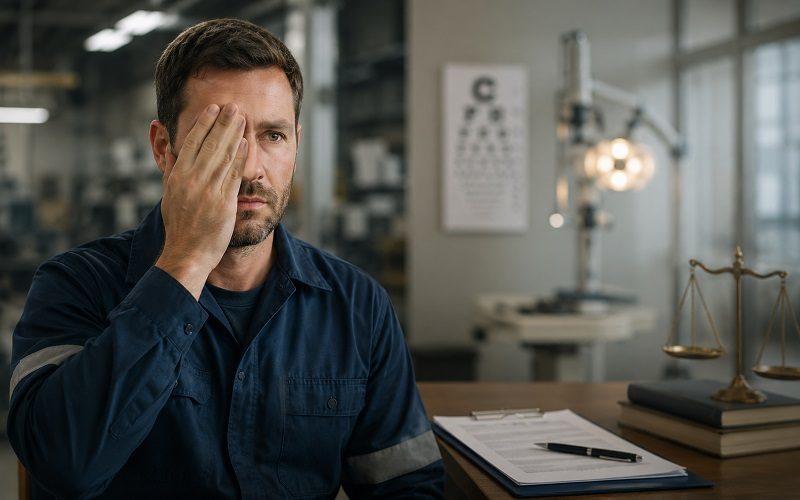
California workers’ compensation may provide medical care, temporary disability payments for qualifying wage loss, permanent disability benefits for lasting impairment, and supplemental job displacement benefits in eligible cases. These benefits depend on medical findings, work capacity, wages, and the effect of the injury on employment.
Vision loss can affect depth perception, peripheral awareness, reading, driving, balance, and safe machinery use. A physician should explain how those limits affect regular duties instead of relying on a vague restriction such as “light duty.”
When an injury causes blindness or major loss of independence, the case may also involve long-term issues found in a catastrophic injury claim. Eye injury compensation should reflect documented treatment, time away from work, lasting impairment, and retraining needs when the employee cannot safely return to the former occupation.
Modified Work Must Be Safe in Practice
A job offer is not suitable merely because it has a different title. A worker with reduced vision may be unable to drive, climb, judge distance, monitor moving parts, read small labels, or work near unguarded edges. Light sensitivity or medication needs can also affect scheduling and working conditions.
The employee should keep written work offers, job descriptions, and medical restrictions. If assigned tasks exceed those limits, the difference should be documented rather than handled only through verbal conversations.
When Another Company Controlled the Hazard
Workers’ compensation is usually the first source of benefits after a job-related eye injury. A separate third-party investigation may be appropriate when defective equipment, an outside contractor, a property owner, or a product manufacturer contributed to the incident.
Purchase records, rental agreements, service contracts, warning labels, equipment history, and site-control documents may identify who created or controlled the danger. Early review matters because machinery can be repaired, chemicals discarded, and surveillance footage deleted.
Speak With an Eye Injury Attorney
California Workers Comp Law Firm can review the medical record, DWC-1 form, safety evidence, work restrictions, benefit notices, and any role played by an outside company. Early review helps preserve evidence and build a clear record of how the injury affects vision, employment, and daily life.
Request a case evaluation to discuss the treatment provided, the insurer’s decision, and the evidence that should be protected.
Important Resources
- California requires suitable eye or face protection for workers exposed to flying particles, hazardous substances, projections, or injurious light. California Code of Regulations, Title 8, §3382
- California sets requirements for emergency eyewash and shower equipment where corrosive or severely irritating substances may contact workers. California Code of Regulations, Title 8, §5162
- California DWC explains injury reporting, emergency treatment, claim filing, and workers’ compensation rights. Guidance for Injured Workers
- NIOSH identifies common workplace eye hazards and the role of protective eyewear and engineering controls. Eye Safety for Workers
- MedlinePlus provides first-aid guidance for chemical exposure, embedded objects, cuts, and vision changes. Eye Emergencies
Reviewed by Attorney Mak
Workers’ Compensation Attorney
Attorney Mak reviews workers’ compensation content for California Workers Comp Law Firm. The firm assists California employees with eye injury claims, denied benefits, permanent vision loss, and other work-related injury matters.
Get A Free Consltation
Fill out the form below and one of our injury specialists will contact you shortly

