
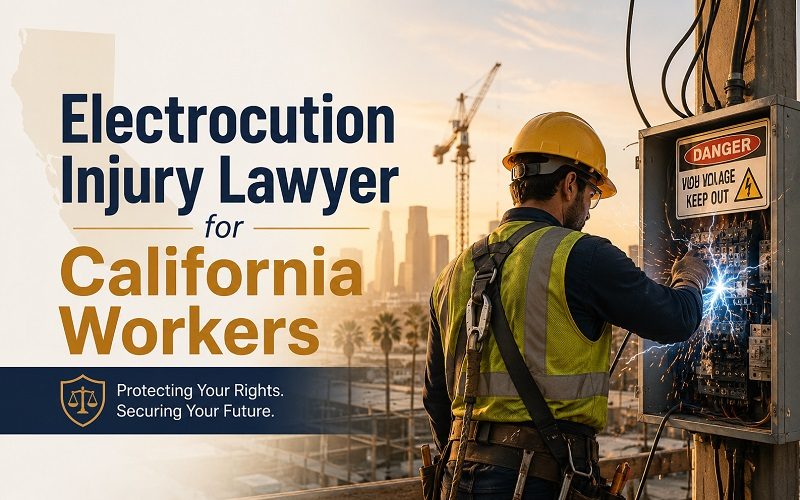
Electrocution Injury Lawyer for California Workers
Electrocution and burn injuries
An electrical incident can leave a worker with burns, nerve damage, muscle injuries, heart complications, or trauma caused by a fall. The full severity of the injury may not be clear from the marks visible on the skin.
Electrocution technically refers to a fatal injury caused by electrical contact. Nonfatal electrical incidents include electric shock, electrical burns, arc-blast injuries, and falls. An electrocution injury lawyer can help injured employees and grieving families understand their rights under California workers’ compensation.
Electrical Injuries Can Reach Deep Tissue
Electrical current can travel through the body and generate heat within muscles and other tissue. A powerful shock may cause internal damage that is far more serious than the visible entrance or exit wound suggests.
OSHA provides examples of electrical injuries involving burns, severe swelling, and extensive tissue damage beneath the skin. Electrical contact can also cause involuntary muscle contractions, loss of balance, and falls from elevated work areas.
Electrical exposure is especially dangerous on active building sites where workers encounter temporary wiring, unfinished systems, power tools, overhead power lines, and energized panels. A serious construction accident can also occur when an electrical shock throws a worker from a ladder, roof, scaffold, or platform.
NIOSH identifies four main types of electrical injuries: electrocution, electric shock, burns or arc blasts, and falls from height. Fatal falls commonly involve ladders and contact with overhead electrical lines.
Electrical burns can damage tissue beneath the skin, while a shock can interrupt normal muscle control and cause a worker to lose balance. Arc blasts may also expose workers to extreme heat, pressure, noise, fire, and flying materials.
Jobs With Serious Electrical Hazards
Electricians and utility employees face direct contact with electrical systems, but the danger extends to many other occupations. Maintenance workers, machine operators, roofers, warehouse employees, tree workers, hospital staff, agricultural crews, and construction workers may all work near energized equipment.
NIOSH reports that construction, manufacturing, and trade, transportation, and utilities recorded the highest numbers of workplace electrocutions during the 2020–2022 period. Construction and utility work also had high rates of electrical injuries involving days away from work.
A workers’ compensation claim should identify the source of electricity, the equipment involved, the task being completed, and the safety measures available at the time. Evidence of an unsafe work environment may show that exposed wiring, damaged cords, missing guards, inadequate training, or ignored warnings contributed to the incident.
Workers may also suffer electrical injuries because of wet conditions, defective tools, overloaded circuits, improper grounding, damaged wiring, or contact with overhead power lines. OSHA’s electrical standards are intended to protect workers from electric shock, electrocution, fires, and explosions.
When faulty machinery or tools are involved, a defective equipment lawyer can investigate whether a manufacturer, supplier, maintenance provider, or another outside company contributed to the accident.
Steps to Take After Electrical Contact
Emergency medical care should come first after a serious shock, burn, loss of consciousness, chest symptoms, breathing difficulty, irregular heartbeat, or fall. The worker should tell medical staff that the electrical contact occurred during work and identify every affected area of the body.
A worker should not assume the injury is minor simply because there is no large external burn. Electrical contact may cause serious damage beneath the skin that is not immediately visible.
The incident should be reported to the employer as soon as possible. The report should record the date, time, location, job assignment, electrical source, equipment involved, symptoms experienced, and names of any witnesses.
Photographs, damaged tools, protective equipment, incident reports, and witness information should be preserved. Equipment should not be repaired, altered, or discarded before it can be examined when its condition may be important to the claim.
California’s Division of Workers’ Compensation advises employees to report a work-related injury promptly. A worker who does not report an injury within 30 days could lose the right to receive workers’ compensation benefits. The employer must generally provide or mail a claim form within one working day after learning about the injury.
A California workplace injury lawyer can help an employee understand the claim process and address problems involving delayed medical treatment or disputed benefits.
Evidence Needed for an Electrical Injury Claim
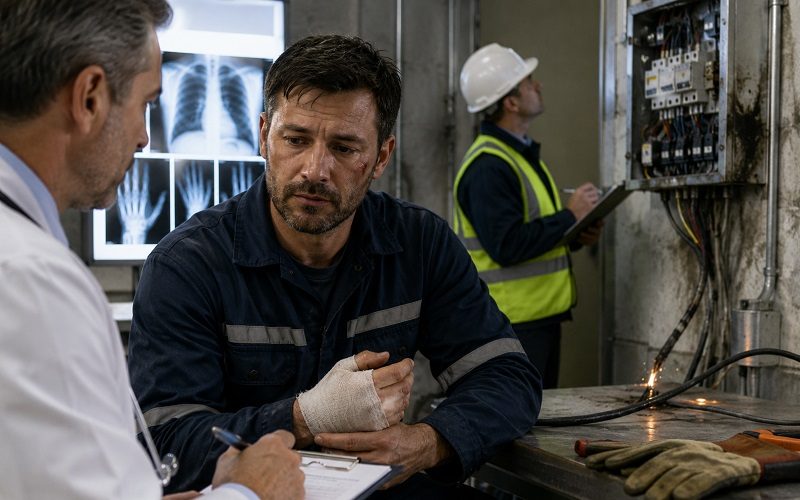
An electrical injury claim requires evidence showing how the contact occurred and how it affected the worker. Medical records should document the symptoms, diagnosis, testing, treatment, medication, specialist referrals, work restrictions, and time lost from employment.
An insurer may dispute the claim when there is no major external burn, no direct witness, or a delay before symptoms appear. An electrocution injury lawyer can compare the medical findings with the workplace evidence when responding to a delayed or denied workers’ compensation claim.
Maintenance records, inspection reports, repair requests, work orders, safety policies, training documents, and lockout procedures may help explain why the accident occurred. These records can reveal whether an employer or another company knew about the electrical danger before the worker was injured.
An electric shock injury lawyer can also determine whether damaged machinery, wiring, tools, or protective equipment should be inspected before being repaired or discarded. Early preservation is especially important when several contractors, employers, or equipment providers were working at the same location.
Serious electrical exposure can result in extensive burns, permanent nerve damage, reduced mobility, brain injury, heart complications, or other life-changing conditions. Workers facing long-term consequences may also need help from a catastrophic injury attorney.
Benefits Available to Injured California Workers
California workers’ compensation may provide medical treatment, temporary disability benefits, permanent disability benefits, supplemental job displacement benefits, return-to-work assistance, and death benefits for qualifying dependents.
Authorized medical care may include emergency treatment, diagnostic testing, specialist appointments, surgery, medication, rehabilitation, and follow-up care reasonably required to cure or relieve the effects of the workplace injury.
Temporary disability benefits replace part of the wages lost when an injury prevents the employee from performing the usual job during recovery. California DWC explains that temporary disability generally pays two-thirds of the worker’s lost gross wages, subject to the minimum and maximum amounts established by law.
Permanent disability benefits may be available when an electrical injury causes lasting impairment. The amount can depend on the medical evaluation, level of impairment, occupation, age, and date of injury.
Some employees with permanent partial disabilities may also qualify for supplemental job displacement benefits when the employer does not offer suitable regular, modified, or alternative work. For qualifying injuries occurring on or after January 1, 2013, this benefit is provided through a nontransferable voucher worth $6,000 for approved retraining and education expenses.
Qualifying dependents may pursue death benefits when an employee dies because of a work-related electrical incident. An electrocution injury lawyer can review the circumstances and identify the benefits that may be available.
Workers who suffer significant electrical burns can also learn more about their legal options from a California burn injury attorney.
What Happens When Benefits Are Denied?
A workers’ compensation insurer may deny an electrical injury claim by arguing that the incident was not work-related, the medical evidence does not support the reported injuries, or the employee failed to provide timely notice.
Disputes may also arise when medical treatment is delayed, temporary disability payments are reduced or stopped, permanent impairment is undervalued, or the insurance company questions whether certain symptoms were caused by electrical contact.
An electrocution injury lawyer can review the denial notice, medical records, witness statements, safety documents, and insurance communications. Legal counsel can also explain the process for challenging disputed medical treatment or workers’ compensation benefits.
Workers should keep copies of all claim forms, medical reports, work-status notes, wage records, letters, and insurance notices. Important dates and deadlines can affect an employee’s ability to challenge an unfavorable decision.
When an Outside Company Shares Fault
Workers’ compensation addresses benefits connected to the worker’s employment. A separate third-party claim may be possible when someone other than the employer created or contributed to the electrical danger.
An electrocution injury lawyer may investigate whether a property owner, general contractor, subcontractor, maintenance company, utility provider, equipment supplier, or manufacturer controlled the dangerous condition.
The investigation should determine who owned the equipment, who installed or maintained it, who controlled the worksite, and who was responsible for correcting electrical hazards. Contracts, inspection records, maintenance documents, photographs, and witness accounts may help answer these questions.
California Labor Code Section 3852 preserves an injured employee’s right to pursue damages against a person or company other than the employer whose conduct caused the injury or death. A worker may therefore be able to seek workers’ compensation benefits while also pursuing a responsible third party.
Third-party claims require early investigation because equipment can be repaired, surveillance footage can be erased, workers can leave the project, and job-site conditions can change quickly. These claims may also involve different damages, insurance policies, legal standards, and deadlines from a workers’ compensation claim.
How an Electrocution Injury Lawyer Can Help
An electrocution injury lawyer can review medical records, accident reports, safety documents, wage loss, work restrictions, and communications from the insurance company.
The lawyer can investigate the electrical source, preserve damaged equipment, interview witnesses, obtain maintenance records, and identify the businesses responsible for workplace safety. Legal assistance may be particularly important when the insurer denies the claim or disputes the extent of the injuries.
When another company contributed to the incident, the lawyer can determine whether the employee may have a third-party claim in addition to workers’ compensation benefits.
Electrical injuries can affect a worker’s health, employment, finances, and family long after the original incident. Early legal review can help preserve important evidence and document the full impact of the injury.
Speak With an Electrocution Injury Lawyer
A workplace electrical injury can create lasting medical, financial, and employment problems. An electrocution injury lawyer can examine the incident, preserve evidence, address disputed benefits, and determine whether an outside company may share responsibility.
Contact California Workers Comp Law Firm today to request a case evaluation and discuss the next steps for protecting your workers’ compensation claim.
Important Resources
- OSHA identifies electric shock, electrocution, fires, and explosions as serious workplace electrical hazards. OSHA electrical safety guidance
- NIOSH explains the four main electrical injury categories: electrocution, electric shock, burns or arc blasts, and falls. NIOSH electrical safety guidance
- OSHA provides examples showing that electrical burns can cause severe swelling and serious tissue damage beneath the skin. OSHA electrical injury guidance
- California DWC explains how to report a workplace injury and begin the workers’ compensation process. California injured worker guidance
- California DWC outlines medical care, temporary disability, permanent disability, job displacement, return-to-work assistance, and death benefits. Workers’ compensation benefits guidance
- California law preserves an injured employee’s right to pursue a responsible third party. California Labor Code Section 3852
Reviewed by Attorney Mak
Workers’ Compensation Attorney
Attorney Mak reviews workers’ compensation content for California Workers Comp Law Firm to help ensure it is clear, accurate, and relevant to injured employees. The firm assists California workers with electrical injury claims, denied benefits, permanent impairment, and other work-related injury matters.
Get A Free Consltation
Fill out the form below and one of our injury specialists will contact you shortly

