
Warehouse and Factory Accident
Lawyer in California
Factory Accident Lawyer
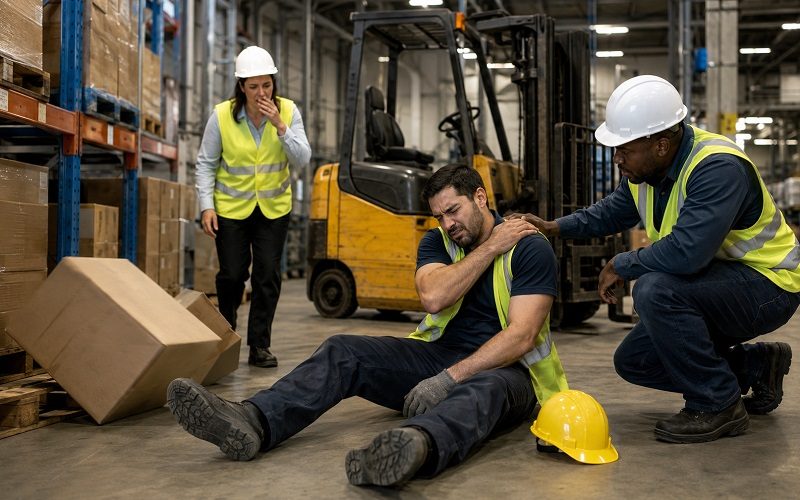
Warehouses and factories combine heavy equipment, repetitive work, moving inventory, powered industrial vehicles, loading areas, and fast production schedules. A worker may be injured when machinery malfunctions, a forklift strikes a pedestrian, merchandise falls from storage racks, or repeated lifting gradually damages the back or shoulders.
A Factory Accident Lawyer can review how the accident occurred, whether workplace evidence has been preserved, what injuries were diagnosed, and how the insurance carrier is handling medical treatment and disability benefits. California Workers Comp Law Firm assists California employees with workplace accidents, denied claims, treatment disputes, and return-to-work problems.
Production Floors and Warehouses Create Different Types of Hazards
Factory employees may operate machinery, handle raw materials, work beside conveyors, load production lines, or perform the same physical movement hundreds of times during a shift. Warehouse employees commonly lift merchandise, move pallets, use loading docks, operate forklifts, and work around stacked inventory.
These environments can produce crush injuries, fractures, back strains, shoulder damage, cuts, burns, head injuries, repetitive-motion conditions, and serious trauma involving several body parts.
A Warehouse Accident Lawyer may examine whether an injury resulted from unsafe storage, poor housekeeping, defective equipment, vehicle traffic, or the physical demands of loading and unloading.
Employees injured in industrial settings may also encounter issues discussed in factory work injury claims, particularly when repetitive duties, machinery, production demands, or lifting contributed to the condition.
Forklift Traffic Can Turn a Routine Shift Into an Emergency
Forklifts and other powered industrial trucks are essential in many warehouses and manufacturing facilities, but they create risks for both operators and nearby employees.
A worker can be struck by a forklift, caught between the vehicle and shelving, injured when a load falls, or hurt when a forklift overturns. Operators may also suffer back, neck, or shoulder injuries from sudden stops, collisions, vibration, or repeated entry and exit from the vehicle.
The condition of the forklift, operator training, load placement, aisle layout, visibility, pedestrian traffic, and worksite rules may all become relevant after an accident.
Workers involved in these incidents may need to document facts addressed in a forklift injury claim. Photographs, surveillance footage, inspection records, witness names, and information about the equipment should be preserved whenever possible.
Machinery Accidents Require More Than a Brief Incident Report
Manufacturing equipment can cause severe injury when guards are missing, machinery activates unexpectedly, controls malfunction, or a worker becomes caught in moving components.
An incident report may describe the accident in only a few sentences. That description may leave out the machine’s condition, prior maintenance problems, operating instructions, safety guards, emergency-stop functions, or whether another employee controlled the equipment.
A Factory Accident Lawyer can compare the employer’s report with photographs, maintenance records, witness statements, medical documentation, and other available evidence.
When a malfunction or unsafe product contributed to the accident, the facts may overlap with issues discussed in a defective equipment injury claim. A separate investigation may also be appropriate when equipment supplied or maintained by an outside company played a role.
Lifting and Repetitive Work Can Cause Injuries Gradually
Industrial injuries do not always result from one dramatic event. Warehouse and factory employees may repeatedly lift boxes, twist while moving materials, reach overhead, push carts, pull loads, scan products, or perform repetitive assembly work.
California Labor Code §3208.1 recognizes both specific injuries arising from one incident or exposure and cumulative injuries resulting from repetitive mentally or physically traumatic activities over time.
A worker whose back pain increases over months may need to document how much was lifted, how frequently lifting occurred, the positions used, and whether mechanical assistance was available. Hand and wrist symptoms may require similar evidence concerning repetitive gripping or tool use.
A Warehouse Worker Injury Lawyer can review whether the medical history describes the real physical demands of the position rather than simply listing the worker’s job title.
Persistent spinal symptoms may also require evaluation for conditions such as a herniated disc injury, particularly when pain is accompanied by numbness, weakness, or symptoms radiating into an arm or leg.
Medical Records Must Connect the Diagnosis to the Job
A diagnosis establishes that an injury exists, but an insurance carrier may still dispute whether employment caused or aggravated the condition.
The treating physician should receive an accurate description of what happened. After a machinery accident, the doctor should know how the body was struck, pulled, compressed, or twisted. For repetitive injuries, the medical history should describe the frequency, force, and duration of work activities.
California Labor Code §4600 requires employers to provide medical treatment reasonably necessary to cure or relieve the effects of a compensable work injury. Depending on the condition, treatment may include diagnostic testing, medication, physical therapy, specialist evaluation, injections, surgery, or other appropriate care.
A Factory Worker Injury Lawyer can review whether treatment requests, diagnostic findings, and work restrictions are consistent with the documented injury.
Workers should retain copies of imaging reports, treatment recommendations, work-status notes, authorization decisions, and correspondence from the claims administrator.
Modified Duty Has to Reflect the Actual Workstation
A physician may restrict lifting, standing, bending, reaching, repetitive hand use, climbing, pushing, pulling, or operation of certain machinery. Those restrictions need to be compared with what the employee will actually do after returning to work.
A warehouse employee restricted from lifting may still be expected to move merchandise or push loaded carts. A factory worker with hand restrictions may be assigned a supposedly lighter position that still requires repetitive gripping throughout the shift.
The words “light duty” or “modified work” do not explain the physical demands of an assignment.
A Workplace Accident Lawyer can review written restrictions, modified-duty offers, job descriptions, and communications from the employer when there is disagreement over whether a proposed assignment is medically appropriate.
Workers should also preserve messages or schedules showing what duties they were actually required to perform after returning.
Serious Accidents Can Affect Long-Term Earning Ability
Crush injuries, severe burns, traumatic brain injuries, amputations, spinal damage, or multiple fractures may prevent an employee from returning to the same industrial position.
Workers’ compensation may provide temporary disability benefits when an employee cannot perform the usual job during recovery, subject to California requirements. Permanent disability benefits may become relevant when lasting impairment remains after the worker’s condition stabilizes.
A serious injury may also affect the worker’s ability to continue lifting, operating equipment, standing throughout a shift, or performing repetitive production work.
When the accident creates permanent neurological or functional impairment, the claim may involve issues similar to those addressed in catastrophic workplace injury cases.
Medical reports should describe not only the diagnosis but also the employee’s lasting functional limitations.
Insurance Disputes Often Begin With Missing Details
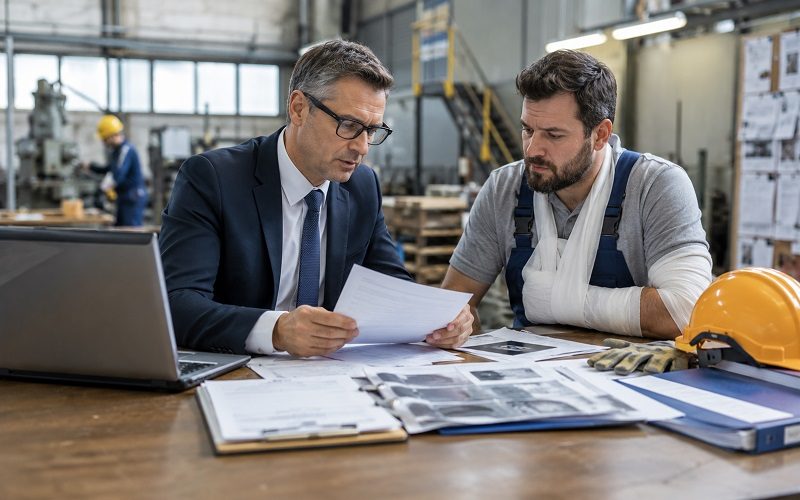
A claims administrator may accept that an accident occurred but dispute particular body parts, later symptoms, recommended treatment, or the amount of disability.
It may also argue that an injury resulted from a prior condition rather than workplace activities. In cumulative trauma cases, the insurer may question whether the job involved enough repetition or physical force to cause the diagnosis.
A Factory Accident Lawyer can review accident reports, medical findings, employment records, job descriptions, surveillance footage, witness statements, and other evidence to determine whether the claim file accurately reflects what happened.
Employees with broader disputed claims can also review information concerning a California workplace injury claim, including medical treatment, disability, and claim documentation.
Evidence Can Change Quickly After an Industrial Accident
Warehouse inventory may be moved immediately after an incident. Damaged equipment can be repaired. Spills may be cleaned, defective pallets discarded, and machinery returned to service.
Workers should report injuries promptly and preserve available photographs, witness names, incident reports, equipment identification, surveillance information, medical records, and work restrictions.
If an accident involves a machine, forklift, rack, loading dock, or defective product, identifying the equipment early may become especially important.
A Warehouse Accident Lawyer can help determine which workplace records may be relevant when the physical scene has already changed.
Legal Review Can Bring the Worksite and Medical Evidence Together
Industrial claims often involve several different records that do not automatically tell the same story. The employer may have an incident report, the physician may have only a brief description of the job, and the insurer may be relying on an incomplete version of the accident.
A Factory Accident Lawyer can examine the worksite evidence, medical records, job duties, treatment decisions, work restrictions, and insurance position. Legal review may also address denied benefits, medical evaluations, disability disputes, return-to-work problems, and potential responsibility involving an outside company.
California Workers Comp Law Firm assists California warehouse and factory employees with machinery accidents, forklift injuries, repetitive trauma, lifting injuries, and other occupational conditions.
Contact California Workers Comp Law Firm to request a case evaluation and discuss the evidence relevant to your workplace accident.
Important Resources
- California recognizes both specific workplace injuries and cumulative injuries resulting from repetitive work activities. California Labor Code §3208.1
- Employers must provide treatment reasonably necessary to cure or relieve the effects of a compensable work injury. California Labor Code §4600
- California DWC explains injury reporting, medical treatment, disability benefits, and workers’ compensation procedures. DWC Injured Worker Guidance
- Cal/OSHA regulations address the safe operation of industrial trucks, including forklifts, in California workplaces. California Code of Regulations, Title 8, §3650
- OSHA provides safety information concerning machinery and machine guarding in industrial workplaces. OSHA Machine Guarding
Reviewed by Attorney Mak
Workers’ Compensation Attorney
Attorney Mak reviews workers’ compensation content for California Workers Comp Law Firm. The firm assists California employees with warehouse accidents, factory injuries, medical treatment disputes, disability issues, denied benefits, and other work-related injury matters.
Get A Free Consltation
Fill out the form below and one of our injury specialists will contact you shortly

