
Top California Herniated Disc
Injury Lawyer
Bulging Disc Lawyer
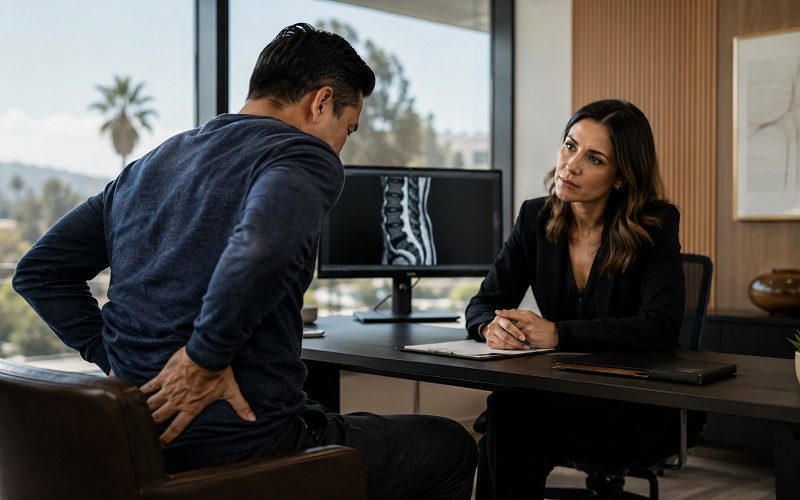
A herniated disc can begin with one heavy lift, a fall, a vehicle impact, or years of repeated bending and material handling. The pain may remain in the neck or lower back, but it can also travel into an arm or leg and interfere with walking, gripping, sitting, driving, or sleeping.
A Herniated Disc Injury Lawyer reviews the employee’s duties, medical history, imaging, work restrictions, and the timing of symptoms. California Workers Comp Law Firm assists employees when treatment is delayed, disability benefits are disputed, or an insurance carrier argues that the condition is unrelated to work.
A Disc Injury Can Begin With One Movement
The discs between the vertebrae cushion the spine and support movement. A herniation occurs when material from the softer center pushes through a weakened or torn outer layer. The displaced material may irritate or compress a nearby nerve. Herniated discs occur most often in the lower back, although the neck can also be affected.
A warehouse employee may feel sudden pain while lifting a carton from floor level. A nurse may be injured while preventing a patient from falling. A delivery worker may develop symptoms after months of loading and unloading. The initial report should describe the task, weight, body position, direction of movement, and every area where pain, numbness, or weakness appeared.
Why Symptoms May Travel Into an Arm or Leg
A lumbar disc injury may cause pain that travels from the lower back into the buttock, leg, ankle, or foot. A cervical disc injury may produce neck pain with numbness, tingling, or weakness in the shoulder, arm, or hand. These symptoms can indicate that a nerve is affected rather than the problem being limited to local muscle soreness.
The medical record should identify which side is affected, what movements increase the symptoms, and whether the worker has weakness, altered sensation, or difficulty completing ordinary tasks. New bladder problems, increasing leg weakness, or serious numbness require prompt medical assessment rather than waiting for an insurance decision.
An MRI Does Not Explain the Entire Claim
X-rays can show fractures, bone changes, and spinal alignment, but they do not provide the same view of discs, ligaments, and nerve roots. MRI can help identify soft-tissue damage and show the location of a disc protrusion or herniation. The scan should still be considered alongside the physical examination, reported symptoms, and work history.
Imaging may show changes at more than one spinal level. The physician should explain which finding matches the worker’s symptoms and whether employment caused a new injury or worsened an earlier condition. When previous back or neck problems are involved, the claim may require a careful review of the aggravation of a pre-existing condition instead of assuming that every current limitation existed before the workplace incident.
One Accident or Repeated Physical Strain

California Labor Code §3208.1 recognizes both specific and cumulative injuries. A specific injury may follow one lift, fall, collision, or sudden twisting movement. A cumulative injury may develop through repeated lifting, bending, pushing, pulling, or exposure to vibration over many shifts.
A worker who cannot identify one exact accident date should document schedules, production demands, weights handled, task rotation, earlier complaints, and when symptoms began affecting regular duties. Under Labor Code §5412, the date of a cumulative injury is tied to when the employee first suffered disability and knew, or reasonably should have known, that employment caused it.
How a Herniated Disc Injury Lawyer Builds the Record
A useful claim file connects the work activity to the medical findings. Incident reports, witness statements, job descriptions, lifting records, photographs, video, prior complaints, and medical notes can establish what happened and how the condition progressed.
The worker should report the injury promptly and keep a copy of the DWC-1 claim form. California DWC warns that failing to report an injury within 30 days may place benefits at risk. For a gradual injury, the report should describe the repeated duties instead of inventing a single accident that did not occur.
A Bulging Disc Lawyer may also review whether the insurer has focused on one sentence in an MRI report while overlooking the physical examination, symptom pattern, or clear change in the employee’s ability to work.
Treatment Should Match the Medical Findings
California Labor Code §4600 requires employers to provide treatment reasonably necessary to cure or relieve the effects of a compensable injury. Depending on the medical evidence, treatment may include medication, physical therapy, specialist care, injections, diagnostic testing, surgery, and follow-up services.
Most people with a herniated disc are initially treated without surgery. Treatment may include medication, activity changes, and physical therapy, although surgery may be considered when symptoms persist or serious nerve compression is present.
Work restrictions should address the employee’s actual duties. A general phrase such as “light duty” may be inadequate when the position still requires lifting, prolonged sitting, repeated bending, climbing, driving, or operating vibrating equipment. Written job offers should be compared with the physician’s restrictions throughout the entire shift.
When a spinal injury causes permanent weakness, loss of mobility, or major long-term care needs, the case may also require the broader medical and vocational evidence used in a catastrophic injury claim.
When the Carrier Blames Age or Degeneration
Insurance carriers may point to age-related changes, an earlier back complaint, or activity outside work. Those facts do not resolve the claim by themselves. The medical opinion should compare the employee’s condition before and after the workplace event, the physical demands of the job, the timing of symptoms, and the objective findings.
A Bulging Disc Lawyer can review whether the carrier fairly considered aggravation, cumulative trauma, and the employee’s complete work history. A consistent record supported by medical reasoning is more useful than a vague statement that the job caused the condition.
Benefits May Change During Recovery
California workers’ compensation may provide medical care, temporary disability payments during qualifying wage loss, permanent disability benefits for lasting impairment, and supplemental job displacement benefits for eligible employees who cannot return to their former occupation.
The worker should preserve medical reports, wage records, benefit notices, work-status notes, and modified-duty offers. Disputes may involve treatment authorization, the amount or duration of disability payments, permanent impairment, or whether the employee can safely resume regular duties.
Speak With a Herniated Disc Injury Lawyer
California Workers Comp Law Firm can review the work history, imaging, medical reports, restrictions, benefit notices, and insurance decision. Early review helps preserve evidence and gives the medical record time to explain how the injury changed the employee’s ability to perform the job.
Contact California Workers Comp Law Firm to request a case evaluation and discuss the records needed to support the claim.
Important Resources
- California defines specific and cumulative workplace injuries. California Labor Code §3208.1
- California explains how the date of a cumulative injury is determined. California Labor Code §5412
- Employers must provide treatment reasonably required to cure or relieve a compensable injury. California Labor Code §4600
- California generally requires written notice of a work injury within 30 days, subject to statutory exceptions. California Labor Code §5400
- California DWC explains reporting, claim forms, and workers’ compensation rights. Guidance for Injured Workers
- NIAMS explains how MRI can show discs, ligaments, nerve roots, and other soft tissues around the spine. Back Pain Diagnosis and Treatment
Reviewed by Attorney Mak
Workers’ Compensation Attorney
Attorney Mak reviews workers’ compensation content for California Workers Comp Law Firm. The firm assists California employees with herniated and bulging disc claims, denied benefits, cumulative trauma, and other work-related injury matters.
Get A Free Consltation
Fill out the form below and one of our injury specialists will contact you shortly

