
FedEx Driver Injury Attorney
California
FedEx Accident Lawyer

A delivery route can change from one stop to the next. A driver may lift a heavy package from the floor of the vehicle, step onto an uneven driveway, encounter a loose dog, or be struck while parked near traffic. When an injury occurs, the route continues, and useful evidence can disappear before the worker understands the claim process.
A FedEx Injury Attorney reviews the delivery assignment, vehicle records, package handling, medical reports, work restrictions, and any outside party that contributed to the accident. California Workers Comp Law Firm assists California delivery workers with disputed treatment, disability benefits, cumulative injuries, and return-to-work problems.
The Route Tells Part of the Story
A useful accident report should identify the delivery address, time, weather, surface condition, package size, vehicle position, and task being performed. Photographs may show a broken step, wet walkway, damaged liftgate, poor lighting, unsecured cargo, or the location where another vehicle made contact.
Route logs, scanner data, dash-camera footage, delivery records, witness details, and vehicle inspection reports may help confirm when and where the incident occurred. These records should be requested early because digital information may be overwritten and a vehicle may be repaired or returned to service.
A Delivery Injury Is Not Always a Traffic Crash
Drivers can be injured while loading, unloading, carrying packages, entering or leaving the vehicle, using a hand truck, or walking across a customer’s property. Common incidents include falls from vehicle steps, strains while lifting, falling packages, liftgate failures, dog attacks, and collisions involving other motorists.
OSHA identifies repetitive lifting, twisting while lifting, bending, forceful movement, poor footing, and vehicle vibration as factors that can contribute to work-related musculoskeletal injuries. Its warehousing guidance also notes that changing loading and unloading areas can create significant slip, trip, and fall hazards.
When an accident causes permanent loss of movement, neurological damage, or major future-care needs, the record may also require the detailed medical and vocational evidence used in a catastrophic injury claim.
When Pain Builds Stop After Stop
Not every delivery injury has one clear accident date. Repeated lifting, carrying, bending, climbing into the vehicle, gripping packages, and driving for long periods can gradually affect the back, shoulders, knees, wrists, and hands.
California Labor Code §3208.1 recognizes specific injuries caused by one incident or exposure and cumulative injuries caused by repetitive traumatic activities over time. A gradual claim should describe route length, package handling, lifting height, package weight, vehicle entry, task frequency, and when symptoms began interfering with work.
Drivers experiencing numbness, tingling, nighttime hand symptoms, or reduced grip may also need evidence specific to Carpal Tunnel Syndrome. When an earlier back, shoulder, or knee problem is involved, the medical report should address whether work aggravated a pre-existing condition.
Report What Happened Before Details Are Lost
The first report to a supervisor and the first medical history often become central parts of the claim file. The worker should describe the actual task and identify every affected body part. A report that says only “back pain” leaves out whether the injury occurred while lifting from the vehicle floor, turning with a package, falling on stairs, or being struck in traffic.
California DWC advises injured employees to report a work injury promptly and warns that waiting more than 30 days can place benefits at risk. The employer must provide or mail a DWC-1 claim form within one working day after learning about the injury or illness.
The worker should keep the completed claim form, medical reports, work-status notes, wage records, route communications, photographs, and benefit notices. Consistent records make it easier to connect the accident or repeated duties with the diagnosis.
How a FedEx Injury Attorney Reviews Medical Care and Benefits
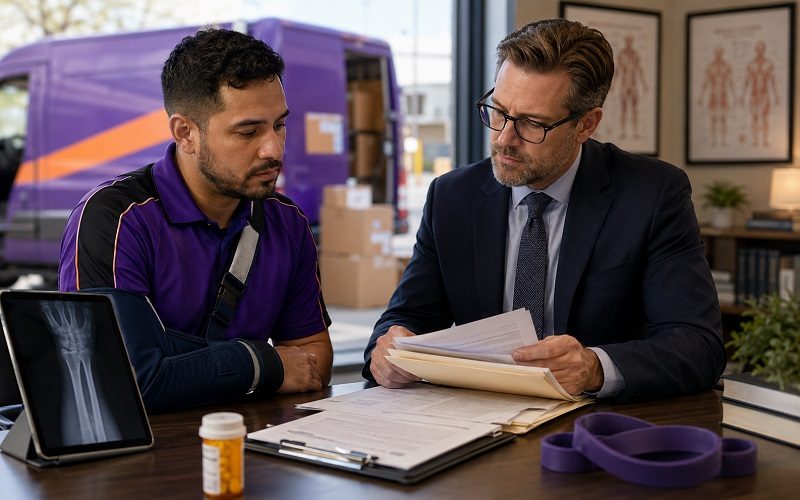
California Labor Code §4600 requires employers to provide treatment reasonably necessary to cure or relieve the effects of a compensable work injury. Depending on the diagnosis, treatment may include emergency care, imaging, medication, physical therapy, specialist visits, injections, surgery, and rehabilitation.
California workers’ compensation may also provide temporary disability payments during qualifying wage loss, permanent disability benefits for lasting impairment, supplemental job displacement benefits for eligible workers, and death benefits for qualifying dependents.
The medical report should explain how the injury affects driving, lifting, carrying, climbing steps, sitting, gripping, and completing a full route. It should also connect each treatment request to the diagnosis rather than relying on general statements about pain.
Modified Duty Must Be Realistic
A driver restricted from lifting, prolonged sitting, repeated bending, climbing, or operating a vehicle may not be able to complete a regular delivery route. Moving the worker to a warehouse or sorting position does not solve the problem when the new assignment still requires repetitive package handling.
Written job offers should be compared with the treating physician’s restrictions. The worker should preserve schedules, job descriptions, and messages about modified duty. A different job title does not make the work medically suitable when the physical demands remain the same.
When Someone Outside the Employer Caused the Accident
Workers’ compensation may apply because the injury occurred during employment, but another person or company may also be responsible. A third-party investigation may involve a negligent driver, unsafe property owner, dog owner, vehicle-maintenance company, equipment supplier, or manufacturer.
California Labor Code §3852 preserves an employee’s right to pursue damages against a responsible party other than the employer. A FedEx Accident Lawyer can review collision reports, property conditions, service records, insurance coverage, and witness evidence while coordinating the outside claim with workers’ compensation benefits.
Speak With a FedEx Injury Attorney
California Workers Comp Law Firm can review the route evidence, medical records, DWC-1 form, wage loss, work restrictions, insurance decisions, and possible third-party responsibility.
Request a case evaluation with a FedEx Accident Lawyer to discuss what happened and identify the records, photographs, vehicle evidence, and witness information that should be preserved.
Important Resources
- California defines specific and cumulative workplace injuries. California Labor Code §3208.1
- Employers must provide treatment reasonably required to cure or relieve a compensable work injury. California Labor Code §4600
- California preserves an employee’s right to pursue a responsible party other than the employer. California Labor Code §3852
- California DWC explains injury reporting, claim forms, and the 30-day reporting rule. Guidance for Injured Workers
- California DWC summarizes medical care, temporary disability, permanent disability, job displacement, and death benefits. Workers’ Compensation Benefits
- OSHA explains ergonomic risks linked to lifting, bending, twisting, poor footing, and vehicle vibration. OSHA Ergonomics Technical Manual
Reviewed by Attorney Mak
Workers’ Compensation Attorney
Attorney Mak reviews workers’ compensation content for California Workers Comp Law Firm. The firm assists California delivery workers with route accidents, lifting injuries, denied benefits, third-party claims, and other work-related injury matters.
Get A Free Consltation
Fill out the form below and one of our injury specialists will contact you shortly

