
Defective Equipment Lawyer in California
Faulty Equipment Attorney
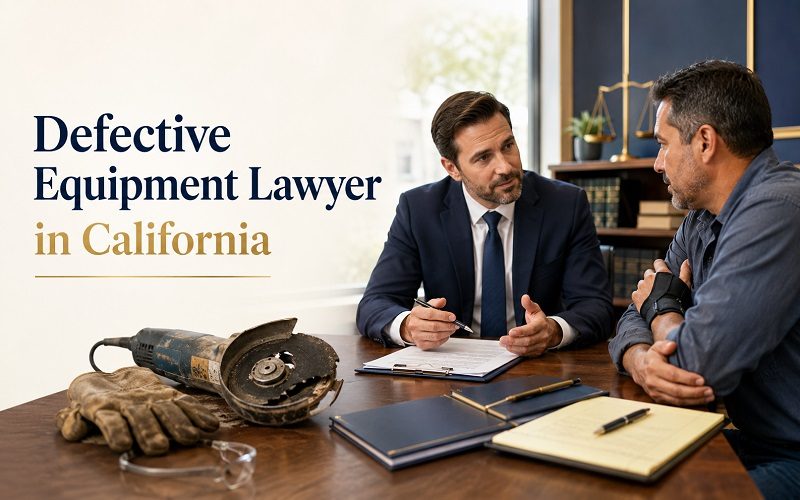
A failed brake, broken guard, loose cable, or unexpected startup leaves a worker with little time to react. The injured employee may be taken for emergency treatment while the equipment is moved, repaired, cleaned, or returned to service. A defective equipment lawyer examines what failed, who controlled the machine, and which records may show that the danger existed before the accident.
California Workers Comp Law Firm assists employees injured by industrial machinery, forklifts, conveyors, ladders, presses, power tools, and work vehicles. California workers’ compensation may address job-related medical care and disability benefits, while a separate claim may involve a manufacturer, rental company, maintenance contractor, supplier, or another outside business.
Equipment Failures That Injure Workers
Equipment accidents occur in warehouses, factories, construction sites, farms, repair shops, restaurants, hospitals, and delivery operations. Workers may be pulled into moving parts, struck by failed components, thrown from platforms, shocked by damaged wiring, or injured when an emergency control does not operate as expected.
The work setting helps explain how an accident happened. A warehouse conveyor presents different risks from a construction lift, industrial press, restaurant cutting machine, or agricultural vehicle. The investigation should identify the task underway, the people nearby, the equipment controls, and the safety system that should have prevented contact with the hazard.
California regulations require hazardous moving machine parts to be guarded when the machine frame or location does not already provide protection. The rule applies to hazards created by revolving, cutting, pressing, squeezing, shearing, rolling, and similar actions, including pinch and shear points.
California also regulates unexpected startup and the release of stored energy during cleaning, repair, servicing, setup, and adjustment. Depending on the task, machinery may need to be stopped, de-energized, blocked, or locked out before work begins.
Preserve the Machine and Work Records
The machine itself is often the strongest evidence. Photographs should capture the failed component, missing or damaged guard, warning labels, switches, control panel, serial number, and surrounding work area. Damaged clothing, protective equipment, tools, and loose parts should also remain available when they help show how the injury occurred.
Inspection forms, maintenance logs, repair requests, training materials, incident reports, and witness statements may reveal whether earlier warnings were ignored. These records can show whether production continued after supervisors learned that equipment was jamming, leaking, shaking, overheating, or stopping unexpectedly.
A written preservation request may be needed before the machine is cleaned, repaired, dismantled, sold, or discarded. Surveillance footage and electronic information can also disappear through routine deletion. Operating data may reveal alarms, shutdowns, speed changes, error messages, or earlier faults that were not included in the first incident report.
Workers should avoid altering damaged equipment themselves. Preserving its post-accident condition allows qualified professionals to inspect the machine and evaluate whether the failure involved its design, manufacture, installation, maintenance, guarding, or operation.
Medical Proof Connects the Injury to Work
The first medical report should identify the equipment involved, the task being performed, every affected body part, and how the worker was trapped, struck, cut, shocked, crushed, or thrown. A note stating only “pain at work” may leave out the details needed to connect the accident with the diagnosis.
Equipment failures can cause fractures, crush injuries, deep wounds, electrical damage, burns, nerve injuries, head trauma, amputations, and permanent loss of function. A worker who initially focuses on the most painful injury should also report other symptoms that emerge after the accident.
Claims involving life-changing harm may require evidence of future surgery, prosthetic care, rehabilitation, replacement devices, home assistance, and permanent work limitations. When the accident causes lasting loss of movement or independence, the case may also involve issues addressed in a catastrophic injury claim.
California Labor Code §4600 requires an employer to provide medical treatment reasonably necessary to cure or relieve the effects of a compensable work injury. Treatment may include hospital care, medication, diagnostic testing, therapy, surgery, orthotic or prosthetic devices, and medically supported follow-up services.
Treatment and Work Restrictions Must Reflect the Injury
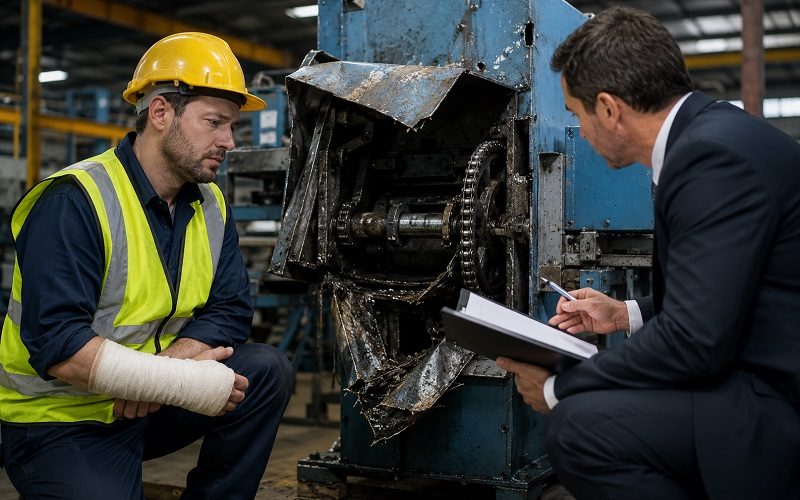
Medical restrictions should address the worker’s actual duties. General language such as “light duty” may be inadequate when the offered position still requires operating machinery, climbing, gripping tools, lifting materials, standing near moving equipment, or using an injured hand repeatedly.
A worker recovering from a crush injury may be unable to grip controls or carry parts. An employee with a head injury may face limits involving driving, balance, noise, or concentration. Someone recovering from an electrical event or serious workplace burn may require specialist treatment and restrictions that continue after the visible wounds begin to heal.
The employee should keep work-status reports, written job offers, job descriptions, and messages about modified duty. A different title does not make a position suitable when its daily requirements conflict with medical restrictions.
When treatment is denied, the medical record should explain why the requested care is connected to the diagnosis and necessary for recovery. Imaging, specialist reports, therapy notes, and accounts of ongoing symptoms can help show why additional care is needed.
Who Controlled the Equipment?
Workers’ compensation is generally the first legal track after an on-the-job equipment injury, but it does not resolve every issue. A faulty equipment lawyer may trace ownership and control when another business designed, manufactured, rented, installed, serviced, repaired, or supplied the unsafe machine.
The employer may own the equipment but rely on an outside contractor for maintenance. A general contractor may control a construction lift used by several subcontractors. A rental business may have inspected the machine before delivery. A manufacturer may have issued service instructions, safety notices, or updated warnings.
A third-party investigation may examine purchase records, rental agreements, maintenance contracts, operating manuals, warning labels, service history, recall information, and earlier reports of similar failures. These documents help identify which company had the ability and responsibility to prevent the accident.
California Labor Code §3852 preserves an injured employee’s right to pursue damages against a person other than the employer when that outside party contributed to the injury. Workers’ compensation and a third-party claim must be coordinated because benefits, medical expenses, reimbursement rights, and settlements may overlap.
When the Insurance Carrier Disputes the Claim
An insurance carrier may accept that an accident occurred but dispute the extent of the injury, the treatment requested, or the employee’s inability to return to regular work. It may argue that the worker ignored instructions, removed a guard, used the machine incorrectly, or had an earlier medical condition.
The response depends on the evidence. Witness accounts, training records, operating instructions, maintenance documents, medical findings, and photographs can show whether the insurer’s version matches what actually happened.
An earlier condition does not automatically explain a new disability. When relevant, the medical evidence may need to address whether the accident aggravated a pre-existing condition or created a separate injury.
The investigation should also determine whether supervisors knew about previous malfunctions, whether the equipment had been removed from service before, and whether production demands led workers to continue using a machine that was not operating safely.
Chemical, Electrical, and Heat-Related Equipment Injuries
Faulty equipment does not cause only crush or impact injuries. A failed valve, damaged hose, leaking tank, or defective spray system may expose a worker to a corrosive substance. Poorly maintained electrical equipment may cause shocks, arc burns, or fires.
When chemicals are involved, the evidence may include the product label, safety data sheet, protective equipment, ventilation records, and emergency response. Employees harmed by corrosive substances may also need evidence specific to a chemical burn injury.
These claims require a clear connection between the equipment failure, the route of exposure, the medical findings, and the limitations that followed. Photographs taken soon after the incident may be important, but later medical records can show damage that was not immediately visible.
Talk to a Defective Equipment Lawyer
An injury caused by unsafe machinery can affect medical treatment, income, work ability, and family responsibilities. At the same time, the employer, equipment owner, or another business may control much of the evidence needed to explain why the machine failed.
A faulty equipment lawyer can review the accident scene, medical records, equipment history, work restrictions, insurance decisions, and possible third-party responsibility. Early review creates time to preserve the machine, request records, identify witnesses, and determine which companies may be involved.
Contact California Workers Comp Law Firm to request a case evaluation before the equipment is changed or important records disappear.
Important Resources
- California requires hazardous moving machine parts and projections to be guarded. California Code of Regulations, Title 8, §4002
- California regulates unexpected startup and stored energy during equipment cleaning, servicing, setup, and repair. California Code of Regulations, Title 8, §3314
- Employers must provide treatment reasonably required to cure or relieve a compensable work injury. California Labor Code §4600
- California preserves an employee’s right to pursue a responsible party other than the employer. California Labor Code §3852
Reviewed by Attorney Mak
Workers’ Compensation Attorney
Attorney Mak reviews workers’ compensation content for California Workers Comp Law Firm. The firm assists California employees with defective machinery claims, denied benefits, third-party liability issues, and other work-related injury matters.
Get A Free Consltation
Fill out the form below and one of our injury specialists will contact you shortly

