
Machine Malfunction Injury Lawyer in California
Machine Malfunction Injury Lawyer

Industrial machines can cause serious injuries when they jam, restart unexpectedly, lose a guard, release stored energy, or fail during normal operation. Workers in factories, warehouses, construction sites, maintenance departments, and manufacturing facilities may be exposed to moving parts, cutting equipment, presses, conveyors, powered tools, and other machinery every day.
A Machine Malfunction Injury Lawyer can review how the accident happened, which body parts were injured, what treatment is required, and whether the workers’ compensation carrier is providing the benefits connected to the injury.
California Workers Comp Law Firm handles workplace injury matters involving machinery accidents, equipment failures, treatment disputes, disability benefits, and denied workers’ compensation claims.
When a Machine Fails at Work
A machine accident can happen within seconds. Equipment may start unexpectedly, a component may break, material may become caught, or a worker may be pulled toward a moving part while operating or clearing a machine.
California safety regulations require guarding for machines with cutting, pressing, squeezing, rolling, mixing, and similar actions when workers can enter a danger zone. The rules also apply to other machinery presenting similar point-of-operation hazards.
A Machinery Accident Lawyer may review photographs, incident reports, witness accounts, maintenance information, operating procedures, and medical records when the cause of an accident is disputed.
Workers injured because machinery or other work equipment failed can also review our defective equipment lawyer page.
Moving Parts Can Cause Severe Injuries
Workers may operate equipment close to gears, rollers, belts, blades, presses, rotating components, conveyors, and other moving parts. When guards are missing, displaced, damaged, or ineffective, contact with these components can result in significant injuries.
An accident may affect the hands, fingers, arms, shoulders, legs, back, head, or multiple areas of the body. Crushing injuries, fractures, burns, cuts, nerve damage, and other trauma may require surgery, rehabilitation, time away from work, or permanent restrictions.
A Machine Malfunction Injury Lawyer can examine whether the medical record documents every body part affected by the accident rather than only the most obvious initial injury.
Employees injured while working with manufacturing equipment may also find relevant information on our factory work injuries lawyer page.
Unexpected Start-Up Can Put Workers in Danger
Some machinery injuries happen while a worker is cleaning, servicing, adjusting, repairing, setting up, or attempting to clear a jam.
California Title 8 Section 3314 addresses hazardous energy during these activities. When unexpected energization, start-up, movement, or the release of stored energy could injure employees, the regulation establishes requirements involving de-energization and lockout/tagout procedures. It specifically includes unjamming machinery within covered servicing activities.
For example, a worker may believe that a machine has stopped before reaching toward an obstruction. If stored mechanical, hydraulic, pneumatic, electrical, or another form of energy causes movement, the worker can be injured before there is time to react.
An Industrial Machinery Accident Lawyer or Equipment Malfunction Injury Lawyer can review what task the employee was performing immediately before the machine moved and whether available evidence accurately describes the incident.
Electrical Failures Can Cause Different Injuries
Some machines rely on powerful electrical systems, motors, controls, wiring, and automated components. A malfunction involving electrical energy can expose a worker to shock, burns, or more serious electrical injuries.
Medical evaluation after an electrical incident may involve more than examining visible injuries because the nature of the exposure and resulting symptoms must also be documented.
A Machine Accident Attorney can review the accident history and medical evidence when an insurer disputes whether a worker’s condition resulted from the machinery incident.
Employees dealing with an electrical workplace injury can also review our electrocution injury lawyer page.
Medical Records Show the Effects of the Accident
The initial medical record can become important in a machinery injury claim. It should identify how the accident occurred, which body parts were injured, what symptoms developed, and what treatment was recommended.
A worker should explain whether the injury involved being struck, crushed, pulled, cut, shocked, burned, or caught between machine components. If symptoms affecting another body part appear after the initial examination, those problems should also be reported to the treating medical provider.
A Machine Malfunction Injury Lawyer can review whether medical reports accurately reflect the accident and the physical requirements of the employee’s regular job.
Work restrictions also matter. A worker may be unable to lift, grip, stand, operate machinery, perform repetitive movements, or safely return to the same equipment while recovering.
Reporting the Accident Starts the Claim
A machinery accident should be reported to the employer as soon as possible. California DWC advises injured employees to report workplace injuries promptly and explains that a failure to report within 30 days can place benefits at risk when the delay prevents the employer from properly investigating what happened.
The report should accurately describe the machine involved, the task being performed, what the equipment did unexpectedly, and which injuries occurred.
When the employer learns of a work-related injury requiring more than first aid, the workers’ compensation process may include providing the employee with a DWC-1 claim form. DWC states that an employer must give or mail the form within one working day after learning of the injury.
A Workplace Machinery Injury Lawyer can review reporting and claim-form issues when there is disagreement over how or when the accident occurred.
Employees dealing with other types of on-the-job accidents can review our workplace injury lawyer page.
Workers’ Compensation Can Help During Recovery
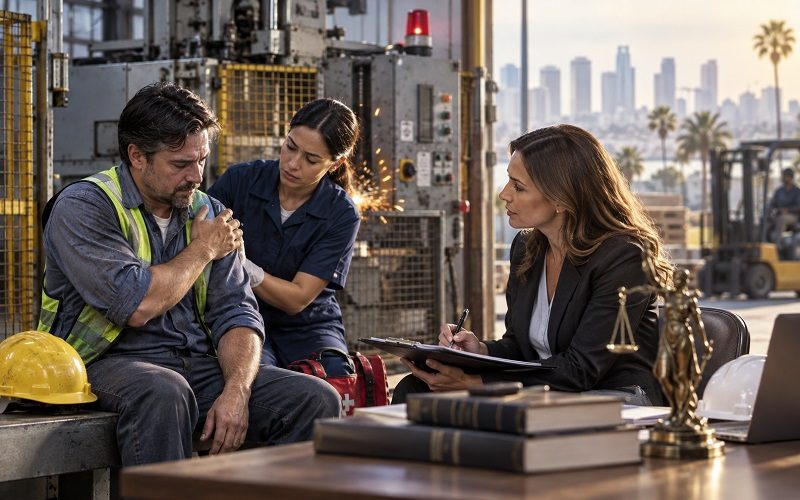
A serious machinery injury can prevent an employee from returning to regular duties for days, weeks, or longer. Treatment may include examinations, diagnostic testing, surgery, medication, therapy, or other care depending on the injury.
California workers’ compensation can provide medical treatment for an accepted work injury. Temporary disability benefits may also apply when medical restrictions prevent an employee from performing the usual job and result in qualifying wage loss.
If permanent impairment remains after the employee’s condition stabilizes, permanent disability may become another issue in the claim.
A Defective Machinery Injury Lawyer can review disputes over medical treatment, temporary disability, permanent disability, work restrictions, and return-to-work status.
The seriousness of the accident alone does not determine the benefits available. Medical findings and the circumstances of the individual claim remain important.
Earlier Injuries Can Complicate the Medical Review
A worker may already have arthritis, prior surgery, an earlier hand injury, back problems, or another medical condition before the machinery accident.
A previous condition does not automatically explain symptoms that begin or become worse after a new workplace incident. Medical evaluators should consider the worker’s condition before the accident and what changed afterward.
For example, an employee may have had occasional shoulder discomfort while continuing full-duty factory work. If a machine suddenly pulls the arm and the worker later requires additional treatment and lifting restrictions, the new accident must be evaluated alongside the earlier history.
Complete medical records can help distinguish earlier symptoms from new or worsened limitations.
Insurance Companies May Dispute Machine Injury Claims
A workers’ compensation carrier may question whether the machine caused the injury, whether all reported body parts are work-related, whether treatment remains necessary, or whether the employee can return to regular work.
A dispute may also arise when there was no witness, when the equipment appears to function normally after the incident, or when the injured worker had a previous medical condition.
A Machine Malfunction Injury Lawyer can review accident reports, photographs, witness statements, medical records, work restrictions, and other available evidence when the insurance company challenges the claim.
A California Machine Injury Attorney may also review whether the treating or evaluating physician received an accurate description of how the equipment malfunctioned and what the employee was doing at the time.
When an accident results in severe and lasting impairment, workers may also find relevant information on our catastrophic injury attorney page.
Speak With a Machine Malfunction Injury Lawyer
A workplace machinery accident can affect an employee’s health, income, and ability to return to the same job. The workers’ compensation claim should accurately document what happened, which injuries resulted, what treatment is required, and how the worker’s abilities changed after the accident.
California Workers Comp Law Firm handles workers’ compensation matters involving factory machines, industrial equipment, unexpected machine start-up, defective equipment, electrical incidents, treatment disputes, and denied benefits.
Attorney Mak can review the accident, medical records, work restrictions, claim status, and issues raised by the insurance carrier.
Important Resources
- California regulations require point-of-operation guarding for machines that expose employees to cutting, pressing, squeezing, rolling, and similar hazards. Cal/OSHA Title 8 § 4184
- California rules address hazardous energy when workers clean, repair, service, adjust, set up, or unjam machinery. Cal/OSHA Title 8 § 3314
- Cal/OSHA explains when lockout/tagout procedures are required to prevent unexpected machine start-up or release of stored energy. Lockout/Tagout Guidance
- DWC explains how an injured employee can report an injury and begin a California workers’ compensation claim. How to File a Claim
- DWC provides guidance on an employer’s responsibilities after learning that an employee has suffered a work-related injury. Workers’ Compensation FAQs
Reviewed by Attorney Mak
Workers’ Compensation Attorney
Attorney Mak assists injured workers with California workers’ compensation claims, including machinery accidents, factory injuries, equipment malfunctions, medical treatment disputes, denied benefits, and related workplace injury matters.
Get A Free Consltation
Fill out the form below and one of our injury specialists will contact you shortly

