
Lyft Drivers’ Workers’ Compensation Claims in California
Lyft Drivers’ Workers’ Compensation Claims
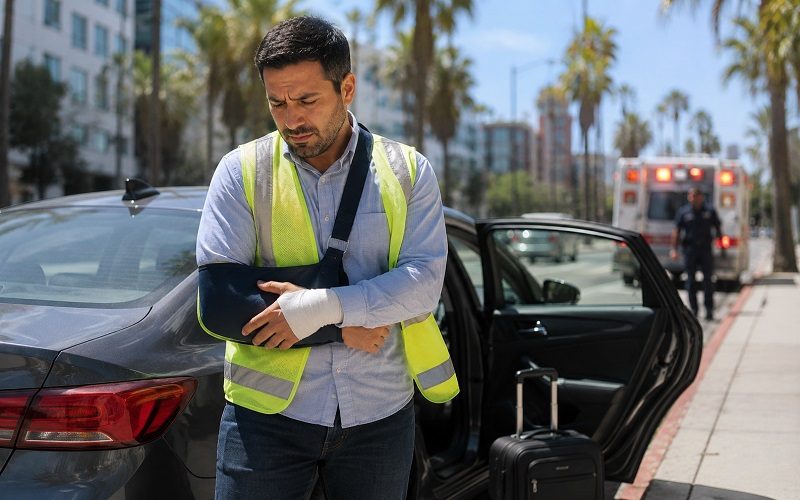
Driving for Lyft can expose drivers to traffic collisions, lifting injuries, falls, and other accidents that may lead to medical treatment or time away from earning income. The legal question after an injury is not always the same as it would be for a traditional employee.
Lyft Drivers’ Workers’ Compensation Claims are affected by California’s rules for app-based drivers. Under Proposition 22, qualifying drivers are generally treated as independent contractors rather than employees of the network company. That classification can change which benefits apply and whether the claim proceeds through traditional workers’ compensation or occupational accident insurance.
California Workers Comp Law Firm can review the driver’s work status, the accident, medical records, insurance coverage, and any dispute over benefits.
Driver Classification Affects the Claim
California Business and Professions Code Section 7451 states that an app-based driver is an independent contractor when the conditions in the law are satisfied. Those conditions include limits on requiring specific work hours, forcing drivers to accept particular rides, or preventing them from working through other platforms.
In 2024, the California Supreme Court upheld Proposition 22 against a constitutional challenge involving workers’ compensation. The court concluded that the initiative’s independent-contractor classification did not conflict with the Legislature’s constitutional authority over the workers’ compensation system. If the statutory conditions are not met, the worker’s classification may require a different analysis.
Because of this framework, Workers’ Compensation for Lyft Drivers does not always operate like an employee claim. A driver’s status and the facts surrounding the injury should be reviewed before deciding which benefits or claim process applies.
Proposition 22 Provides Injury Coverage
Although qualifying app-based drivers are generally independent contractors, California law requires network companies to carry, provide, or make available occupational accident insurance.
Business and Professions Code Section 7455 requires coverage for medical expenses and lost income resulting from covered injuries suffered while an app-based driver is online with the platform. The law requires at least $1 million in medical-expense coverage and disability payments based on the driver’s average weekly earnings, subject to statutory limits.
This occupational accident coverage is different from a standard employee workers’ compensation policy. A Lyft Driver Workers’ Compensation Lawyer can review the applicable insurance, the driver’s status, and whether another employment relationship may affect the case.
Lyft Drivers’ Workers’ Compensation Claims can therefore involve occupational accident benefits, classification issues, or both.
The Timing of the Accident Matters
Coverage can depend on what the driver was doing when the injury occurred. Section 7455 defines “online” to include time when an app-based driver is using the platform and can receive ride requests, as well as engaged time.
The law also contains limits. Certain accidents outside engaged time may not be covered when the driver is engaged on another network company’s platform or involved in personal activities.
A Lyft Driver Injury Attorney may review app activity, ride history, timestamps, police reports, photographs, medical records, and other evidence showing what was happening at the time of the accident. These records can become important when Lyft Driver Injury Claims are disputed.
Lyft Drivers Can Be Injured Outside a Collision
Traffic crashes are a major risk for rideshare drivers, but they are not the only way an injury can happen. A driver may hurt the back or shoulder while lifting luggage, fall while entering or leaving the vehicle, or suffer an injury while assisting a passenger.
The medical record should explain how the injury occurred, which body parts were affected, and how the symptoms limit the driver’s ability to continue working.
A Lyft Driver Injury Lawyer can review whether the injury falls within available occupational accident coverage and whether another insurance or employment issue is involved. Drivers with broader job-related injury questions can also review our workplace injury lawyer page.
Medical Records Should Show What Changed
Medical documentation becomes important when an insurer questions whether an accident caused the claimed condition or whether treatment remains necessary.
The driver should give medical providers an accurate history of the accident, symptoms, prior treatment, and physical demands of rideshare work. For a collision, the record should identify when symptoms began and which areas of the body were affected. For a lifting injury, it should describe the task that produced the symptoms.
A previous back, neck, shoulder, or knee problem does not automatically explain a new injury. If an earlier condition becomes worse after a rideshare accident, the before-and-after medical history may matter. Our aggravation of a pre-existing condition page explains this issue in more detail.
A California Lyft Driver Injury Attorney can review whether the medical evidence matches the accident history and the driver’s actual limitations.
Lost Income May Be Part of the Claim
A driver who cannot safely operate a vehicle may lose income even when the vehicle itself can still be driven. Pain, medication, restricted movement, weakness, or limited sitting tolerance can interfere with rideshare work.
Section 7455 requires occupational accident policies to include disability payments equal to 66 percent of the app-based driver’s average weekly earnings from all network companies as of the injury date, subject to minimum and maximum weekly rates. The statute provides these payments for up to the first 104 weeks after the injury and calculates average weekly earnings from network-company earnings during the 28 days before the covered accident.
Lyft Drivers’ Workers’ Compensation Claims involving time away from driving should be supported by medical restrictions and accurate earnings records. A Lyft Driver Workers’ Compensation Attorney can review disagreements over coverage, income documentation, or disability payments.
Another Job Can Change the Analysis
Some Lyft drivers also work as employees for another business. If the person is injured while performing duties for that separate employer, traditional California workers’ compensation may become relevant.
The existence of a Lyft account does not determine which system applies to every driving injury. The actual work relationship and the activity being performed at the time of the accident matter.
A Rideshare Driver Workers’ Compensation Lawyer can review whether another employer, insurance policy, or work assignment changes the claim.
Disputed Claims Need a Clear Timeline

An insurer may dispute whether the driver was online, whether the accident happened during a covered period, whether the injury resulted from the incident, or whether medical restrictions support lost-income benefits.
App records, ride receipts, police reports, photographs, witness information, medical records, earnings statements, and claim communications can help establish what happened and when.
A Lyft Driver Work Injury Lawyer can review the reason benefits were denied or limited and identify the factual or medical issue that needs to be addressed.
Lyft Drivers’ Workers’ Compensation Claims may become more complicated when another driver, multiple insurance policies, or a separate employer is involved.
Speak With a Lawyer About a Lyft Driver Injury
California gives qualifying app-based drivers an injury-benefit framework that differs from traditional workers’ compensation for employees. Determining the correct path requires reviewing the driver’s status, the timing of the accident, the available insurance, and the medical evidence.
California Workers Comp Law Firm handles disputes involving rideshare injuries, occupational accident coverage, worker classification, disability benefits, and related workplace injury issues.
Questions about Lyft accident workers’ compensation coverage should be evaluated according to the actual facts rather than the driver’s job title alone. Attorney Mak can review the accident, app records, medical treatment, earnings information, and insurance documents.
For drivers facing uncertainty about coverage or benefits, Lyft Drivers’ Workers’ Compensation Claims should be reviewed carefully before important evidence is lost or deadlines pass.
Important Resources
- California law explains when an app-based driver is treated as an independent contractor of a network company. Business and Professions Code § 7451
- Proposition 22 requires occupational accident insurance for specified injuries suffered while an app-based driver is online. Business and Professions Code § 7455
- The California Supreme Court addressed Proposition 22 and workers’ compensation in its 2024 decision. Castellanos v. State of California
- California’s Labor Commissioner explains that Proposition 22 created a different worker-status test for app-based drivers. Uber and Lyft Driver Information
- DWC provides general information about benefits available to employees under California’s workers’ compensation system. Workers’ Compensation Benefits
Reviewed by Attorney Mak
Workers’ Compensation Attorney
Attorney Mak assists injured workers with California workers’ compensation matters, including rideshare injuries, worker-classification disputes, denied benefits, workplace accidents, and related claims.
Get A Free Consltation
Fill out the form below and one of our injury specialists will contact you shortly

