
Teacher Injury Lawyer for
Workplace Injuries
Injured Teacher Attorney
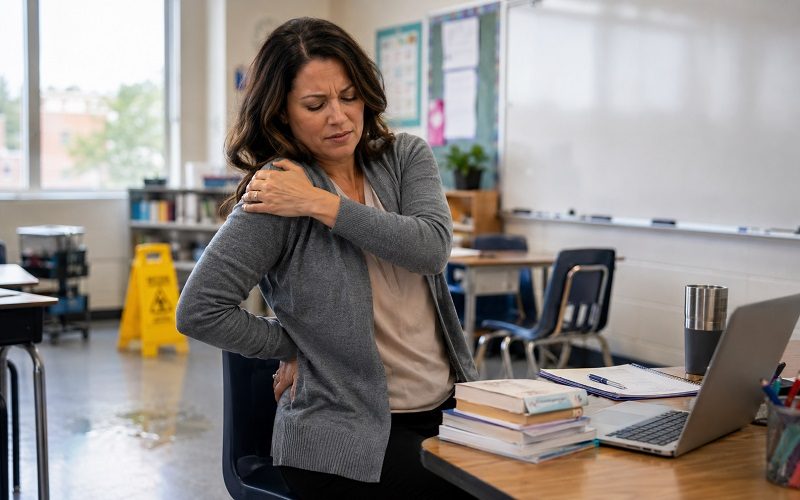
Teachers can be injured in classrooms, hallways, playgrounds, laboratories, parking areas, and school events. A fall on a wet floor, an injury while assisting a student, repetitive computer work, lifting classroom materials, or an unexpected act of violence can require treatment and time away from work.
A Teacher Injury Lawyer can review how the injury occurred, whether it developed gradually, what medical evidence supports the claim, and whether the employer or claims administrator is providing appropriate workers’ compensation benefits. California Workers Comp Law Firm assists California educators with workplace injuries, treatment disputes, denied benefits, and return-to-work issues.
School Work Creates More Injury Risks Than Many People Expect
Teachers supervise recess, carry books or equipment, arrange classrooms, use computers for long periods, attend field trips, and sometimes physically assist students. Common injuries include slips and falls, back strains, shoulder or knee injuries, repetitive hand conditions, head injuries, and harm caused by defective equipment.
Science, vocational, art, and special-education settings can create additional risks involving chemicals, machinery, lifting, or physical contact. An injury does not have to happen while a teacher is giving a lesson. When it arises from job duties, it may support a workplace injury claim based on the facts and medical evidence.
Repetitive Teaching Duties Can Lead to Cumulative Trauma
California Labor Code §3208.1 recognizes both specific injuries caused by one incident or exposure and cumulative injuries caused by repetitive mentally or physically traumatic activities over time.
Teachers may spend years typing lesson plans, grading, writing on boards, carrying materials, or working in positions that repeatedly strain the neck, shoulders, back, hands, or wrists. Symptoms may start gradually and become serious enough to require treatment or work restrictions.
Repeated keyboard and hand use, for example, may contribute to conditions such as carpal tunnel syndrome. A cumulative claim should describe the actual duties, how often they were performed, how symptoms progressed, and when the teacher learned that the condition could be work-related.
Reporting and Medical Documentation Build the Claim Record
California DWC advises injured workers to report an injury or illness to the employer as soon as possible. Delayed reporting can create problems, and failure to report within 30 days may place benefits at risk depending on the circumstances.
The report should identify what happened, where it occurred, the body parts affected, and any witnesses. For a gradual condition, the teacher should explain that symptoms developed over time instead of forcing the injury into an inaccurate single accident date.
After the employer learns of the injury, the employee should receive a DWC-1 claim form. Copies of the claim form, incident reports, emails, photographs, witness information, and medical work-status notes should be preserved.
Medical reports also need to reflect the real job. A physician evaluating an educator should understand duties such as prolonged standing, lifting, computer use, playground supervision, stair climbing, or physical assistance to students.
A prior back, shoulder, knee, or other condition does not automatically explain a new workplace problem. Claims involving an aggravation of a pre-existing condition may require comparison of the employee’s condition before and after the workplace injury.
Medical Care and Work Restrictions Can Become Disputed
California Labor Code §4600 requires employers to provide medical treatment reasonably necessary to cure or relieve the effects of a compensable work injury. Depending on the accepted claim and medical findings, care may include physician visits, diagnostic testing, medication, therapy, surgery, or other appropriate treatment.
Workers’ compensation may also provide temporary disability payments when an employee cannot perform the usual job because of an injury and permanent disability benefits when lasting impairment remains, provided the applicable requirements are met.
A teacher with a significant back injury may require imaging, therapy, injections, or surgery. Symptoms such as radiating pain, weakness, numbness, or significant movement limitations may lead to a diagnosis such as a herniated disc injury.
Work restrictions should match classroom reality rather than rely only on a label such as “light duty.” A teacher restricted from lifting may still be asked to move supplies or assist a student. Someone with a knee injury may struggle with stairs, playground supervision, or prolonged standing.
Written restrictions, modified-duty offers, schedules, and job descriptions can help establish whether proposed work is consistent with the treating physician’s limitations.
Claim Disputes Often Focus on Causation and Timing
An insurer may dispute whether an accident happened at work, whether repetitive duties caused a condition, or whether later symptoms are related to the original injury. It may also question the need for treatment, the extent of disability, or whether an earlier medical condition better explains the complaints.
A Teacher Injury Lawyer can compare the insurer’s position with medical reports, employment records, witness statements, incident documentation, and the educator’s actual duties.
An Injured Teacher Attorney may also identify weaknesses in the record, such as an incomplete claim form, omitted body parts, an inaccurate accident history, or a medical report that does not explain the physical demands of teaching.
If benefits are denied or delayed, the dispute may require further medical evaluation or proceedings within California’s workers’ compensation system.
Serious School Incidents May Raise Additional Legal Questions
Most teacher injury matters proceed through workers’ compensation, but some accidents may involve another responsible party. A defective product, unsafe contractor, vehicle collision, or another outside party may require investigation for potential third-party responsibility in addition to workers’ compensation benefits.
Severe falls, assaults, head trauma, spinal injuries, and other catastrophic workplace injuries may affect long-term work capacity. Early documentation becomes especially important when an injury could lead to surgery, permanent restrictions, or an extended absence from teaching.
Returning to the Classroom Requires Practical Restrictions
A return-to-work decision should account for what the teacher actually does throughout the school day. Restrictions may affect standing, walking, lifting, bending, repetitive hand use, driving, stair use, playground supervision, or physical interaction with students.
A modified assignment may still be unsuitable if the duties conflict with medical restrictions. For example, changing a teacher’s classroom schedule may not solve the problem if the employee is still expected to stand for long periods or repeatedly lift materials.
Teachers injured on the job should keep written work restrictions and communications about modified duty. These records may become important if the school and treating physician have different understandings of what the proposed assignment requires.
Legal Review Can Connect the Job, Injury, and Medical Evidence

A workplace claim file may contain only part of what happened. An accident report may be brief, while medical records may omit classroom duties or repetitive activities that contributed to the condition.
A Teacher Injury Lawyer can review the accident or cumulative exposure, examine medical reports, and identify missing workplace evidence. Legal review may also address denied treatment, disability disputes, medical evaluations, return-to-work problems, and disagreements over whether teaching duties caused or aggravated the condition.
An Injured Teacher Attorney can help organize the connection between the work activity, diagnosis, and need for treatment or disability benefits when the employer or insurance carrier challenges that relationship.
Get Help After a Workplace Teaching Injury
A work injury can affect a teacher’s health, income, classroom duties, and ability to continue working. The claim record should accurately reflect the job duties involved, the medical consequences, and any restrictions that followed.
If you need a Teacher Injury Lawyer after an accident or work-related condition, contact California Workers Comp Law Firm to request a case evaluation. The firm can review the injury report, medical evidence, work restrictions, and insurance response and explain the steps that may be available under California workers’ compensation law.
Important Resources
- California recognizes specific and cumulative workplace injuries. California Labor Code §3208.1
- Employers must provide treatment reasonably required to cure or relieve a compensable work injury. California Labor Code §4600
- California DWC explains injury reporting, medical care, wage-replacement benefits, and return-to-work issues. DWC Injured Worker Guidance
- California DWC explains how an injured worker starts the claims process using the DWC-1 form. DWC How to File a Claim
- The state guidebook explains medical treatment, disability benefits, return to work, and other parts of California workers’ compensation. Workers’ Compensation in California: A Guidebook for Injured Workers
Reviewed by Attorney Mak
Workers’ Compensation Attorney
Attorney Mak reviews workers’ compensation content for California Workers Comp Law Firm. The firm assists California employees with workplace injury claims, occupational conditions, denied benefits, medical disputes, and other work-related injury matters.
Get A Free Consltation
Fill out the form below and one of our injury specialists will contact you shortly

