
Police Officer Injury Lawyer
in California
Police Officer Injury Lawyer

Police officers face injury risks that extend beyond ordinary workplace accidents. Vehicle collisions, physical confrontations, falls, lifting incidents, firearms training, emergency responses, and repeated exposure to traumatic events can lead to physical or psychological conditions that interfere with an officer’s ability to perform regular duties.
A Police Officer Injury Lawyer can review how the injury occurred, the medical evidence, work restrictions, available benefits, and any special rules that apply to qualifying California peace officers. California Workers Comp Law Firm handles workplace injury claims involving law enforcement officers, disputed treatment, disability benefits, occupational conditions, and denied claims.
Police Work Can Cause Injuries in Many Ways
An officer may be injured during an arrest, pursuit, traffic stop, emergency response, training exercise, or vehicle collision. Other injuries can happen while lifting equipment, restraining a suspect, climbing, running, or performing repetitive physical duties over time.
These incidents can affect the back, neck, shoulders, knees, hands, head, or several body parts at once. A serious accident may also produce neurological injuries or permanent physical limitations.
The same workers’ compensation principles that apply to a broader workplace injury can apply to law enforcement accidents, but California provides additional statutory protections for certain categories of peace officers.
A Police Officer Injury Attorney can examine accident reports, medical records, witness information, work restrictions, and other evidence showing how the injury arose from police duties.
Back and Joint Injuries Can Affect Regular Duties
Police work can require prolonged driving, running, climbing, lifting, wearing equipment, defensive movements, and sudden physical exertion. An officer who suffers a back, shoulder, knee, or other musculoskeletal injury may be unable to perform the full range of regular duties during recovery.
A vehicle collision or physical confrontation can cause immediate symptoms. Other conditions can develop gradually after repeated strain.
When spinal trauma results in a diagnosed herniated disc injury, medical records should address symptoms such as restricted movement, weakness, numbness, or pain that interferes with standing, driving, lifting, or other job requirements.
A Police Officer Work Injury Attorney can review whether the medical documentation accurately reflects what the officer must physically do at work rather than relying only on a general job title.
Some Conditions Develop Over Years of Service
Not every law enforcement injury begins with one identifiable event. Repeated physical strain, occupational exposure, and other job conditions can result in illnesses or injuries that become apparent after years of service.
California workers’ compensation law also provides specific presumptions for certain peace officers and specified medical conditions. Eligibility depends on the officer’s position, employing agency, length of service in some situations, and the requirements of the particular statute. The presumptions do not automatically apply to every person who holds some form of peace-officer status.
A Law Enforcement Injury Lawyer can review the officer’s employment classification before determining whether a statutory presumption applies.
Some Officers Have Special Heart and Pneumonia Protections
Labor Code Section 3212.5 applies to specified full-time members of city or municipal police departments, the California Highway Patrol, sheriffs and deputy sheriffs, and certain district attorney investigators who also fall within the peace-officer definitions identified in the statute.
For qualifying officers, heart trouble and pneumonia developing or manifesting during covered service are presumed to arise out of and in the course of employment. The heart-trouble presumption generally requires at least five years of service in the covered capacity. The statute also provides a limited period during which the presumption can continue after service ends.
A Police Officer Workers’ Compensation Lawyer can determine whether the officer’s position satisfies the statute before relying on a presumption.
An officer does not need to fit within one of these presumptions to have every valid workers’ compensation claim. Ordinary workplace injuries can still be evaluated under California’s general workers’ compensation rules.
Cancer Claims Have Separate Requirements
California Labor Code Section 3212.1 creates a rebuttable cancer presumption for certain firefighters and peace officers who meet the statutory definitions and are primarily engaged in active law enforcement.
For covered peace officers, the statute requires the worker to demonstrate exposure during service to a known carcinogen as defined by the law. When the requirements are satisfied, qualifying cancer is presumed to arise out of and in the course of employment, although the employer may present evidence to rebut that presumption.
Because eligibility depends on the officer’s classification and exposure history, a California Law Enforcement Injury Attorney may need to review assignments, employment records, exposure information, medical reports, and the type of cancer involved.
PTSD Claims Have Their Own Presumption
Repeated exposure to violence, fatal accidents, threats, and traumatic incidents can affect law enforcement officers differently from many other employees.
Labor Code Section 3212.15 currently provides a rebuttable workers’ compensation presumption for post-traumatic stress disorder diagnosed according to the applicable diagnostic standard when the claimant belongs to one of the peace-officer categories covered by the statute and is primarily engaged in active law enforcement activities.
The law generally requires six months of covered service, although that requirement does not apply when the injury is caused by a sudden and extraordinary employment condition. The current statute is scheduled to remain in effect through December 31, 2028, unless California law changes before then.
A Police Workplace Injury Lawyer can review whether the officer falls within the covered category and whether the medical evidence addresses the statutory requirements.
Some Officers Receive Salary Continuation While Disabled
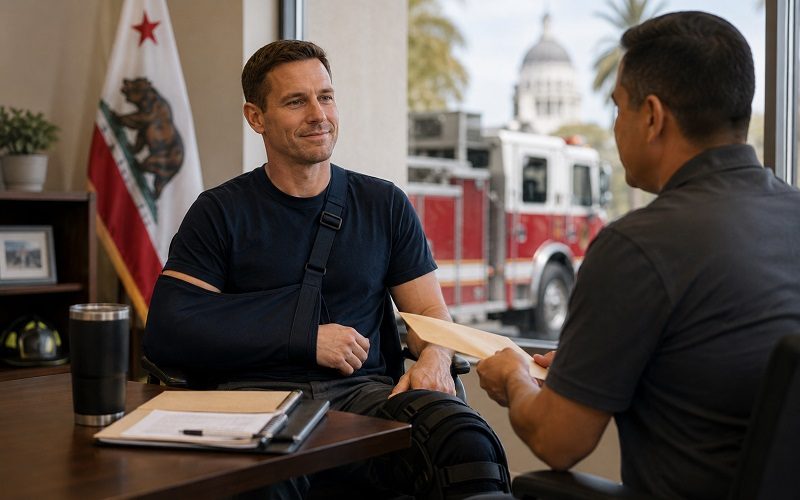
California Labor Code Section 4850 gives certain qualifying regular, full-time public safety employees a leave of absence without loss of salary when they are disabled by an injury or illness arising out of and in the course of their duties.
Eligible employees listed in the statute include city police officers and several other specified law enforcement classifications. The salary-continuation period is provided in place of temporary disability payments and generally cannot exceed one year, subject to the conditions stated in the law.
This protection does not apply automatically to every law enforcement employee. Classification, employment status, and the employing agency matter.
A Police Officer Workers’ Compensation Attorney can review whether Section 4850 applies and how salary continuation interacts with the other benefits involved in the claim.
Medical Evidence Still Shapes the Claim
Special statutory protections do not eliminate the importance of medical records.
A Police Officer Injury Lawyer can review whether the treating or evaluating physician received an accurate account of the accident, officer’s duties, prior medical history, symptoms, and physical limitations. Medical reports can affect treatment, temporary disability, permanent disability, and return-to-work decisions.
California DWC states that injured employees are entitled to reasonable medical treatment needed to cure or relieve the effects of a work-related injury. Treatment requests are evaluated under California’s Medical Treatment Utilization Schedule and utilization review process.
For serious injuries, long-term limitations may raise issues similar to a catastrophic workplace injury, particularly when the officer cannot return to the physical demands of regular law enforcement work.
A Previous Injury Does Not Automatically Defeat the Claim
Law enforcement officers sometimes enter a new injury claim with a history of earlier back, shoulder, knee, or other medical problems.
The existence of a prior condition does not automatically establish what caused the officer’s current disability. The medical evaluator should compare the officer’s condition and work ability before the new incident with symptoms, treatment needs, and restrictions that followed it.
For example, an officer may have previously received treatment for a back condition but returned to unrestricted duty. If a later collision produces new symptoms and additional restrictions, the medical evidence should address what changed.
These cases can involve the same medical questions seen in an aggravation of a pre-existing condition claim.
A Police Officer Disability Lawyer can review disputes involving lasting impairment, work restrictions, and permanent disability. Disability retirement or pension rights, when applicable, are separate from the workers’ compensation benefits being addressed in the claim.
Serious Incidents Can Affect More Than One Body Part
A physical confrontation, vehicle collision, or other violent incident may produce several injuries at the same time. The initial report may focus on the most painful condition while other symptoms become clearer after medical evaluation.
Head trauma, spinal injuries, fractures, soft-tissue injuries, and eye damage can all affect an officer’s ability to return to full duty. For example, an eye injury at work can create restrictions involving vision, driving, weapons use, or other safety-sensitive duties.
The medical record should identify each body part affected by the incident and explain any continuing limitations.
A Denied Claim Can Be Challenged
A police officer’s occupation does not prevent an insurance carrier or public employer from disputing a claim. Disagreements can involve whether the injury occurred in the course of employment, whether a particular condition is work-related, the applicability of a statutory presumption, medical treatment, disability, or return-to-work status.
California DWC explains that workers’ compensation disputes can involve medical evaluations and proceedings before a workers’ compensation administrative law judge.
A Police Officer Injury Lawyer can review the denial notice, medical reports, employment records, accident evidence, and statutory issues driving the dispute.
A California Police Officer Injury Lawyer may also examine whether the claims administrator properly considered a law-enforcement presumption or Section 4850 benefits when those provisions apply.
Speak With a Police Officer Injury Lawyer
A police injury claim can involve more than the basic question of whether an accident happened at work. Officer classification, medical evidence, statutory presumptions, salary continuation, permanent disability, and return-to-duty restrictions can all affect the claim.
California Workers Comp Law Firm handles workplace injury matters involving law enforcement officers, vehicle accidents, physical injuries, occupational conditions, disputed treatment, disability benefits, and denied claims.
Attorney Mak can review the incident, medical records, job status, available presumptions, work restrictions, and issues raised by the claims administrator.
Important Resources
- California law provides heart-trouble and pneumonia presumptions for specified police officers and other qualifying law enforcement employees. Labor Code § 3212.5
- California provides a cancer presumption for specified firefighters and qualifying peace officers who meet the statute’s requirements. Labor Code § 3212.1
- California law currently provides a PTSD presumption for specified peace officers and other covered public-safety employees. Labor Code § 3212.15
- Certain regular, full-time law enforcement employees may receive salary continuation instead of temporary disability for a qualifying period of disability. Labor Code § 4850
- California DWC explains reporting injuries, obtaining medical care, and pursuing workers’ compensation benefits. DWC Injured Worker Guidance
Reviewed by Attorney Mak
Workers’ Compensation Attorney
Attorney Mak assists injured workers with California workers’ compensation claims involving police and law enforcement injuries, occupational conditions, disputed medical treatment, disability benefits, and denied claims.
Get A Free Consltation
Fill out the form below and one of our injury specialists will contact you shortly

