
Occupational Disease Lawyer in
California
Workplace Disease Lawyer
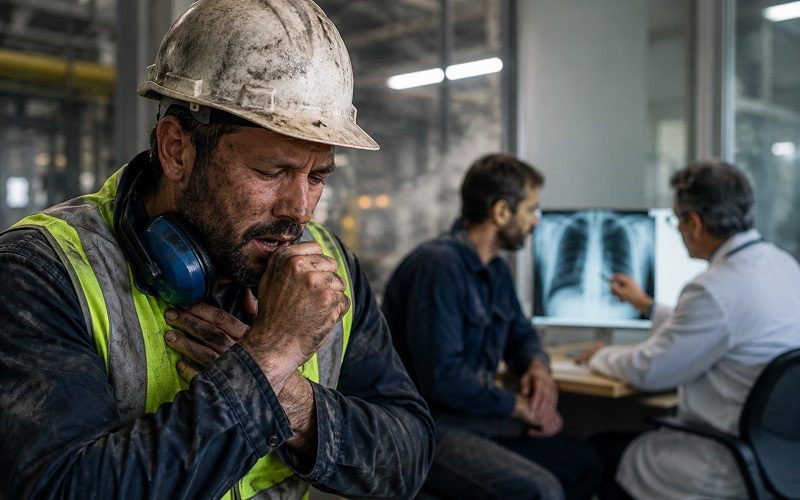
Some workplace conditions develop after months or years of exposure rather than from one identifiable accident. Chemicals, dust, noise, biological agents, repetitive physical activity, and other workplace conditions can contribute to illnesses that eventually require treatment or prevent an employee from continuing regular work.
California workers’ compensation law recognizes diseases arising out of employment as injuries. An Occupational Disease Lawyer can review the employee’s work history, exposure records, medical evidence, and the reasons an insurance carrier gives for denying or limiting a claim.
California Workers Comp Law Firm handles claims involving occupational illness, harmful workplace exposure, cumulative injuries, medical treatment, disability benefits, and disputed work-related conditions.
Occupational Diseases Often Develop Over Time
An occupational disease does not always begin with a sudden event. A worker may perform the same duties or encounter the same workplace conditions for years before symptoms become significant.
California DWC physician guidance explains that occupational diseases can result from chemical agents, physical agents such as noise or vibration, biological agents, and repetitive activities. The important question is whether employment caused or contributed to the disease.
Long-term exposure to asbestos, solvents, fumes, or other workplace substances can raise issues similar to those involved in asbestos and chemical exposure claims, where the employee’s work history and the nature of the exposure can become central evidence.
An Occupational Disease Attorney can examine when exposure occurred, what duties the worker performed, when symptoms appeared, and whether medical evidence connects the condition to employment.
Work Exposure Must Be Connected to the Illness
Having a disease while employed does not automatically make the condition work-related. The medical and factual evidence must address the relationship between the employee’s job and the illness.
A Work-Related Disease Lawyer may review where the employee worked, what substances or conditions were present, how frequently exposure occurred, and whether protective measures were used. Earlier jobs can also matter when an illness developed after exposure across several employers or workplaces.
Certain occupations present distinct exposure issues. For example, healthcare worker injury claims may involve biological exposure as well as the physical demands of patient care.
California Labor Code Section 3208 defines an injury to include a disease arising out of employment. This allows an occupational illness to enter the workers’ compensation system even when there was no single accident that caused it.
Some Conditions Appear Long After the Exposure
One difficulty with occupational illness claims is the gap that can exist between workplace exposure and the diagnosis.
A worker may leave a particular job before learning that an illness could be connected to earlier employment. In other situations, symptoms may begin gradually and become disabling only after repeated exposure.
California Labor Code Section 5412 addresses the date of injury for occupational diseases and cumulative injuries. The statute defines the date as the point when the employee first suffers disability from the condition and knows, or reasonably should know, that the disability was caused by present or prior employment.
This rule can become important when an insurance company argues that a claim was reported too late or questions which period of employment is relevant.
A Workplace Disease Lawyer can review medical records, employment history, and when the worker first learned of the possible connection between the disease and the job.
Medical Evidence Builds the Connection to Work
Occupational disease cases often depend on a detailed medical history.
The physician may need information about job duties, workplace substances, length and frequency of exposure, protective equipment, earlier employment, symptoms, diagnostic findings, and non-work exposures that could also have contributed to the condition.
An Occupational Disease Lawyer can review whether the evaluator received an accurate description of the worker’s employment and exposure history. A medical opinion based on an incomplete job history may not address the actual conditions the employee encountered.
Records from employers, physicians, hospitals, laboratories, and previous jobs may become relevant. Safety data sheets, job descriptions, industrial hygiene records, witness information, and other workplace documents may also help establish the type and duration of exposure.
A clear timeline can be especially important when symptoms developed slowly rather than after a single workplace incident.
Repetitive Work Can Cause Gradual Conditions
Occupational illness claims are not limited to chemical or biological exposure. Repetitive physical work can also cause conditions that develop over time.
An employee may repeatedly grip tools, type, kneel, lift, bend, carry materials, or perform the same hand and arm movements throughout a shift. DWC physician guidance includes repetitive motions among the workplace factors that can produce occupational disease.
For example, repetitive hand and wrist duties can result in conditions addressed in work-related carpal tunnel claims.
An Occupational Illness Lawyer may examine the worker’s actual daily activities rather than relying only on a job title. The frequency, duration, and physical demands of the work can help the medical evaluator understand how the condition developed.
Earlier Health Problems Do Not End the Analysis
A worker may already have asthma, hearing problems, arthritis, respiratory disease, or another medical condition before a later period of harmful workplace exposure.
An earlier diagnosis does not automatically establish the cause of the worker’s current disability. The medical evidence should identify whether employment caused a new condition, contributed to an existing disease, or made an earlier condition materially worse.
For example, an employee may have controlled respiratory symptoms before beginning work around a particular airborne exposure. If symptoms later become more severe, treatment changes, or work restrictions become necessary, the medical evaluator should examine what changed.
These disputes can overlap with aggravation of a pre-existing condition issues, where the worker’s health and ability before the new exposure are compared with the condition afterward.
An Occupational Illness Attorney can review whether earlier medical problems are being evaluated fairly rather than treated as an automatic reason to deny the claim.
Reporting a Gradual Illness Can Be Complicated
California DWC advises workers to report an injury or illness to their employer as soon as possible. When a condition develops gradually, DWC says it should be reported once the employee learns or believes that the job caused it.
That can be more complicated with an occupational disease because a worker may experience symptoms before a doctor identifies a possible workplace connection.
Once the employer learns of a work-related injury or illness, it must provide or mail a DWC-1 claim form within one working day. Filing the form starts the formal workers’ compensation claim process.
A Work-Related Illness Lawyer can review when the employee became aware of the occupational connection and whether reporting, claim filing, or injury-date issues are being disputed.
Workers’ Compensation Can Provide Benefits

An accepted claim can provide medical treatment reasonably required to cure or relieve the effects of a work-related illness. California DWC also identifies temporary disability, permanent disability, and supplemental job displacement benefits among the benefits that may be available depending on the circumstances.
Temporary disability may apply when an occupational illness prevents the employee from performing the usual job and results in qualifying wage loss. Permanent disability can become relevant when lasting impairment remains after the worker’s condition stabilizes.
An Occupational Disease Lawyer can review disputes involving medical treatment, disability payments, work restrictions, medical evaluations, and return-to-work issues.
Workers’ Compensation for Occupational Disease can become particularly complex when exposure occurred over a long period, involved more than one workplace, or became disabling years after the employee first encountered the hazard.
Insurance Companies May Dispute the Cause
A carrier may argue that the illness resulted from age, lifestyle, a non-work exposure, an earlier medical condition, or employment with another company.
It may also challenge how much workplace exposure occurred, when the disease became disabling, or whether the employee knew earlier that the condition was related to work.
A Workplace Illness Attorney may review employment records, medical reports, exposure evidence, diagnostic findings, and statements from people familiar with the work environment.
An Occupational Disease Lawyer can also examine whether a denial accurately addresses the worker’s complete employment history. California DWC confirms that an employee has the right to challenge a denied workers’ compensation claim.
Occupational diseases remain part of the broader category of workplace injuries and illnesses covered by California’s workers’ compensation system when the legal requirements are satisfied.
Speak With an Occupational Disease Lawyer
An occupational disease claim may involve years of employment records, medical treatment, workplace exposure, and questions about when the employee first knew the condition was work-related. A clear medical and employment history can be especially important when the insurance company disputes causation.
California Workers Comp Law Firm handles workers’ compensation matters involving occupational disease, toxic exposure, repetitive work, pre-existing condition disputes, medical treatment, disability benefits, and denied claims.
A California Occupational Disease Attorney or California Occupational Illness Lawyer can review the worker’s employment history, medical records, exposure evidence, claim status, and issues raised by the insurance carrier.
Important Resources
- California law defines a workers’ compensation injury to include a disease arising out of employment. Labor Code § 3208
- California law establishes the date of injury for occupational diseases and cumulative injuries based on disability and knowledge of the work connection. Labor Code § 5412
- DWC physician guidance explains occupational diseases caused by chemical, physical, biological, and repetitive workplace exposures. Physician’s Guide to Workers’ Compensation
- DWC explains when employees should report a gradually developing work-related injury or illness. DWC Injured Worker Guidance
- DWC explains how the DWC-1 form begins a workers’ compensation claim after an employer learns of an injury or illness. How to File a Claim
Reviewed by Attorney Mak
Workers’ Compensation Attorney
Attorney Mak assists injured workers with California workers’ compensation claims involving occupational diseases, workplace exposure, repetitive injuries, disputed medical treatment, denied benefits, and related workplace illness matters.
Get A Free Consltation
Fill out the form below and one of our injury specialists will contact you shortly

