
Manufacturing and Industrial Accident Lawyer in California
Manufacturing Accident Lawyer
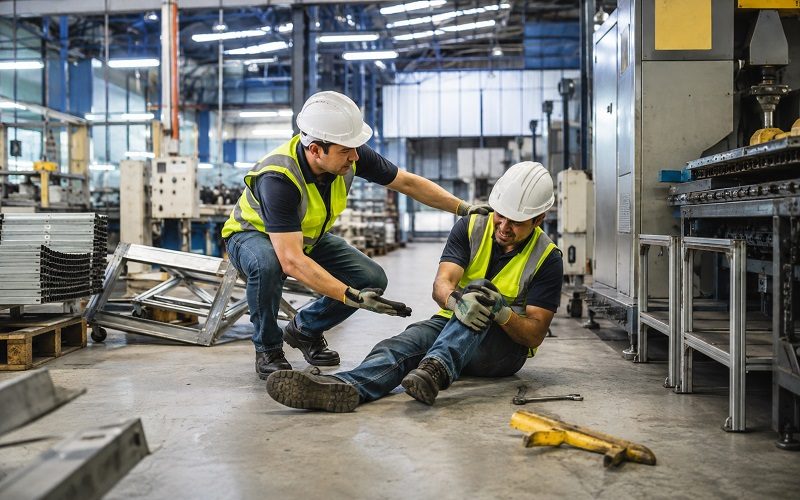
Manufacturing and industrial employees work around machinery, production lines, powered equipment, chemicals, electrical systems, heavy materials, and repetitive processes. A machine can start unexpectedly, a material can shift, equipment can fail, or a routine production task can result in a serious injury.
An Industrial Accident Lawyer can examine how the accident happened, what the medical records show, and whether the workers’ compensation carrier is addressing the injuries and benefits involved. California Workers Comp Law Firm handles workplace claims involving factory accidents, machinery injuries, equipment failures, burns, electrical incidents, and other industrial work injuries.
Industrial Accidents Can Happen in Seconds
Factory and manufacturing work often places employees close to equipment that cuts, presses, rolls, mixes, conveys, lifts, or moves materials. Even a familiar task can become dangerous when a machine jams, a component breaks, material falls, or equipment begins moving unexpectedly.
California regulations require guarding at the point of operation for machines involving cutting, pressing, squeezing, rolling, mixing, and similar actions when an employee can enter the danger zone. Similar machinery hazards must also be guarded.
A Manufacturing Accident Lawyer may examine photographs, incident reports, witness statements, maintenance records, job duties, and medical documentation when the circumstances of an industrial accident are disputed.
Workers injured on production floors may experience many of the same risks involved in factory work injuries, including contact with machinery, heavy materials, repetitive tasks, and moving equipment.
Machine Failures Can Cause Severe Injuries
Industrial machinery can expose employees to gears, blades, rollers, presses, conveyors, motors, hydraulic systems, and other moving components. An equipment failure may crush, strike, pull, cut, or trap a worker before the machine can be stopped.
Injuries can affect the hands, fingers, arms, shoulders, legs, back, head, or several body parts at once. Some workers require surgery or rehabilitation, while others return to work with temporary or permanent restrictions.
An Industrial Accident Lawyer can review whether the initial claim and medical reports identify every body part affected by the accident rather than focusing only on the most obvious injury.
When damaged or malfunctioning equipment contributes to the accident, issues involving defective workplace equipment may become part of understanding how the incident occurred.
Servicing Machinery Creates Different Risks
Some serious accidents happen while an employee is cleaning, repairing, adjusting, setting up, or unjamming industrial equipment rather than during normal production.
California Title 8 Section 3314 applies when unexpected energization, machine start-up, movement, or the release of stored energy could injure an employee performing these tasks. It requires hazardous-energy controls in covered situations and specifically includes unjamming machinery within the activities addressed by the regulation.
A worker may believe that equipment is fully stopped before reaching into a machine. Mechanical, electrical, hydraulic, pneumatic, or other stored energy can still create dangerous movement if the equipment has not been properly isolated.
A Factory Accident Lawyer can examine what the employee was doing immediately before the accident and whether available evidence accurately describes the machine’s condition and operation.
Burns and Electrical Injuries Need Careful Documentation
Factories and industrial facilities may involve hot surfaces, welding equipment, chemicals, electrical panels, powered machinery, and processes that generate heat or energy.
An employee can suffer a burn after contact with hot material, steam, chemicals, sparks, or heated machinery. Industrial chemicals can also cause skin, eye, or respiratory injuries depending on the exposure. When a workplace substance causes tissue damage, the medical and factual issues may overlap with those seen in chemical burn injuries.
Electrical incidents can produce different injuries. A worker may experience shock, burns, muscle injury, or other medical complications after contact with energized equipment. Serious electrical workplace injuries require an accurate record of the exposure and the symptoms that followed.
A Manufacturing Injury Attorney can review whether the medical documentation reflects the full nature of the accident and all resulting conditions.
Repetitive Factory Work Can Also Cause Injury
Not every manufacturing injury begins with a sudden accident. Repetitive production work can place stress on the same muscles, joints, and body parts throughout a shift.
An employee may repeatedly lift materials, grip tools, reach across a workstation, bend, push, pull, or perform the same hand and arm movements. Over time, these duties may result in a condition requiring medical treatment or work restrictions.
California Labor Code Section 3208.1 recognizes both specific injuries caused by one incident or exposure and cumulative injuries caused by repetitive physically or mentally traumatic activities over time.
A Factory Worker Injury Lawyer may examine the employee’s actual duties, frequency of repetitive movements, medical history, and when symptoms began. A job title alone may not show the physical demands of a production or manufacturing position.
Medical Records Should Match the Accident
Medical documentation plays an important role after an industrial injury. Records should identify how the accident occurred, which body parts were affected, what symptoms developed, and what treatment or restrictions are necessary.
Workers should describe the incident clearly. If a hand was pulled into machinery, a heavy object struck the back, or equipment unexpectedly moved during maintenance, those details can help the physician understand the mechanism of injury.
An Industrial Accident Lawyer can review whether the medical reports also reflect the employee’s regular duties. Restrictions on lifting, gripping, standing, reaching, bending, operating machinery, or performing repetitive tasks can directly affect whether the worker can return to the same position.
Earlier medical problems should also be disclosed. A prior injury does not automatically establish that new symptoms or restrictions are unrelated to a later industrial accident.
Reporting the Accident Protects the Claim
California DWC advises workers to report an injury to their employer as soon as possible. If an injury develops gradually, it should be reported when the employee learns or believes that work caused the condition. DWC warns that failing to report an injury within 30 days can place workers’ compensation benefits at risk.
The report should identify where the accident happened, the machinery or process involved, what occurred, and which body parts were injured.
Once an employer learns about a work-related injury or illness, DWC states that the employer must provide or mail a workers’ compensation claim form within one working day. After the employee files the form, appropriate medical treatment must be authorized within one working day while the claim is being investigated, subject to the statutory pre-acceptance treatment limit.
A Manufacturing Workplace Injury Lawyer can review reporting and claim-form issues if the employer or insurance company disputes how or when the injury occurred.
Workers’ Compensation Can Support Recovery
An accepted California workers’ compensation claim may provide medical care, temporary disability benefits, permanent disability benefits, and supplemental job displacement benefits when the applicable requirements are met.
Temporary disability can apply when an employee loses wages because a work injury prevents the employee from performing the usual job while recovering. DWC explains that temporary disability generally replaces two-thirds of lost gross wages, subject to statutory minimums and maximums.
For manufacturing employees, medical restrictions may prevent machine operation, lifting, repetitive movement, prolonged standing, or other essential job duties.
An Industrial Accident Lawyer can review disputes involving medical treatment, temporary disability, permanent disability, work restrictions, and return-to-work status. A Workplace Accident Attorney may also examine whether every injury resulting from the incident has been included in the claim.
Insurance Companies May Challenge Industrial Claims

A serious workplace accident does not prevent a workers’ compensation dispute. A carrier may question whether the injury happened as reported, whether a particular body part was affected, whether treatment remains necessary, or whether the employee can return to regular work.
Disputes can become more complicated when an accident was unwitnessed, the machine appears to operate normally afterward, or the employee had an earlier medical condition.
Accident reports, photographs, witness accounts, maintenance information, medical records, diagnostic findings, and work restrictions can help establish a clearer account of what happened.
An Industrial Injury Lawyer can examine the reason for a denial or disputed benefit and determine whether the medical and factual record addresses the insurer’s concerns.
When an industrial accident causes severe and lasting impairment, the resulting limitations may also raise issues associated with a catastrophic workplace injury.
Returning to Industrial Work Depends on Restrictions
A worker does not need to be completely recovered before return-to-work questions arise. The treating physician may release an employee to modified duties while restricting certain physical activities.
Whether modified work is appropriate depends on the medical restrictions and the duties available. A manufacturing employee may be unable to lift heavy materials, operate particular machinery, stand for an entire shift, or perform repeated hand movements even if some work remains possible.
An Industrial Injury Attorney can review disagreements involving modified duties, medical restrictions, and the employee’s ability to return safely to the regular position.
The focus should remain on what the medical evidence says the employee can actually perform rather than relying only on the name of the job.
Speak With an Industrial Accident Lawyer
Manufacturing and industrial accidents can lead to significant medical treatment, time away from work, permanent restrictions, or disputes with the workers’ compensation carrier. The claim should accurately reflect how the injury occurred and how it affects the employee’s ability to work.
California Workers Comp Law Firm handles claims involving manufacturing accidents, machinery injuries, factory work, hazardous equipment, burns, electrical incidents, cumulative trauma, and disputed workers’ compensation benefits.
Attorney Mak can review the accident, medical records, work restrictions, claim status, and issues raised by the insurance company.
Important Resources
- California requires point-of-operation guarding for specified machinery hazards in general industry. Cal/OSHA Title 8 § 4184
- California regulates hazardous-energy control during machinery cleaning, repair, servicing, setup, adjustment, and unjamming. Cal/OSHA Title 8 § 3314
- California law recognizes both specific injuries and cumulative injuries caused by repetitive work activities. Labor Code § 3208.1
- DWC explains how injured employees report workplace injuries and begin the workers’ compensation process. DWC Injured Worker Guidance
- DWC explains the DWC-1 claim form and the steps that follow after an employer learns of an injury. How to File a Claim
Reviewed by Attorney Mak
Workers’ Compensation Attorney
Attorney Mak assists injured workers with California workers’ compensation claims involving manufacturing accidents, industrial injuries, machinery incidents, denied benefits, medical treatment disputes, and related workplace injury matters.
Get A Free Consltation
Fill out the form below and one of our injury specialists will contact you shortly

