
Forklift Injury Attorney in California
Forklift Injury
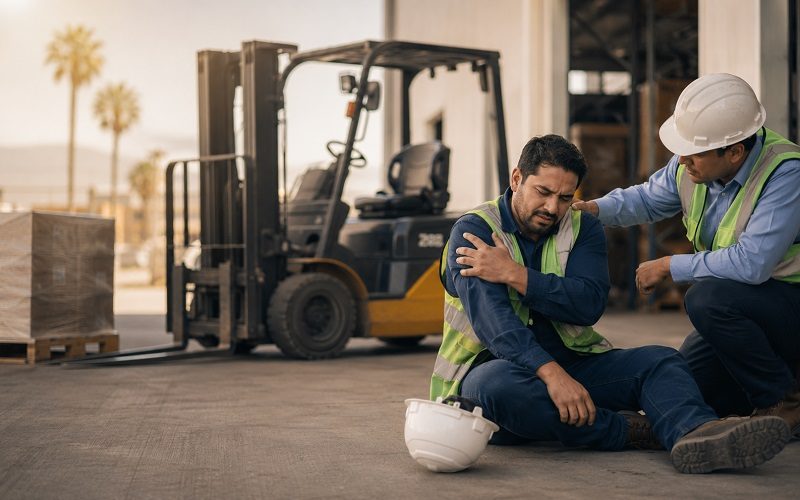
A forklift accident can happen during an ordinary trip across a warehouse, loading dock, construction site, or factory floor. A worker may be struck in a blind aisle, trapped against a rack, hit by falling cargo, or injured when a lift truck overturns. By the time the employee returns from emergency treatment, the forklift may have been moved, repaired, or placed back into service.
A Forklift Injury Attorney reviews the truck, load, travel path, operator training, maintenance history, and medical evidence. California Workers Comp Law Firm assists California employees with treatment disputes, disability benefits, work restrictions, and claims involving outside companies that may share responsibility.
A Moving Vehicle Can Leave Several Types of Evidence
Forklift cases are not limited to collisions between the truck and a pedestrian. An operator may be injured during a rollover, a load may fall from raised forks, or an employee may be crushed between the vehicle and a fixed object. Accidents also occur when trailers move away from loading docks or workers are lifted without a suitable platform.
Photographs should show the forklift, forks, tires, controls, warning devices, load, aisle, floor condition, rack system, and nearby barriers. The truck’s model, serial number, capacity plate, attachments, and visible damage should also be recorded.
Surveillance footage, electronic records, inspection forms, maintenance requests, delivery schedules, and witness names may explain the truck’s speed, direction of travel, load position, and visibility. Early preservation matters because footage may be deleted and equipment can be repaired before the cause is fully investigated.
Blind Corners, Unstable Loads, and Loading Docks
California’s industrial-truck rules require operators to slow down and sound the horn at cross aisles and other places where visibility is blocked. When a load obstructs the forward view, the operator must travel with the load trailing. Operators must also look in the direction of travel and make sure people are clear before moving.
Loads must be balanced, braced, or secured against falling or tipping, and trucks cannot be loaded beyond their rated capacity. Forks should generally be carried as low as possible while the vehicle is moving. These details can become central when a pallet falls, an overloaded truck becomes unstable, or raised forks strike a worker.
Loading docks create additional risks. California requires trucks, trailers, and railcars entered by powered industrial trucks to be secured against unintended movement. Employers must also use a system that prevents a truck or trailer from pulling away before loading or unloading is complete.
Training Records Can Explain How the Crash Happened
California requires employers to ensure that powered industrial truck operators are trained and competent before they operate the equipment. Training must combine formal instruction, practical exercises, and an evaluation of the operator’s performance in the workplace. Topics include controls, visibility, load stability, capacity, steering, pedestrian traffic, narrow aisles, ramps, and workplace-specific hazards.
Refresher training is required after an accident or near miss, observed unsafe operation, an unsatisfactory evaluation, assignment to a different truck, or a workplace change that affects safe operation. Each operator’s performance must also be evaluated at least once every three years.
A forklift accident lawyer may request training certificates, evaluation dates, disciplinary records, and documents showing which type of truck the operator was authorized to use. Missing or outdated records can help explain why an unsafe operator was permitted to continue driving.
The Forklift Should Have Been Checked Before the Shift
California requires drivers to check industrial trucks at the beginning of each shift. The inspection should address items such as tires, horns, lights, brakes, steering, batteries, controls, and the forklift’s lifting system. When a truck is unsafe, the problem must be reported, and the vehicle cannot be returned to service until it has been made safe.
Maintenance logs, repair invoices, inspection checklists, and earlier complaints may show that the forklift had brake problems, steering issues, hydraulic leaks, damaged forks, or a malfunctioning warning device before the accident.
The investigation should also determine whether an attachment changed the truck’s capacity or handling. California requires capacity information to remain legible and restricts major modifications affecting safe handling unless the required approval and engineering conditions are met.
Medical Records Should Describe the Full Impact
Forklift accidents can cause fractures, crush injuries, head trauma, spinal damage, deep wounds, amputations, and injuries from falling cargo. An operator involved in a rollover may suffer several injuries at once, while a pedestrian may be pinned between the forklift and a wall, rack, trailer, or workbench.
The first medical report should identify how the accident occurred and every affected body part. A brief note stating only “hurt at work” may not show whether the employee was struck, trapped, thrown, or hit by a falling load.
When an accident causes permanent loss of mobility, independence, or earning capacity, the case may also require the long-term medical and vocational evidence used in a catastrophic injury claim.
California Labor Code §4600 requires employers to provide treatment reasonably necessary to cure or relieve the effects of a compensable injury. Medical care may include emergency treatment, imaging, medication, therapy, specialist visits, surgery, rehabilitation, and medically necessary equipment.
Modified Duty Must Match the Worker’s Restrictions
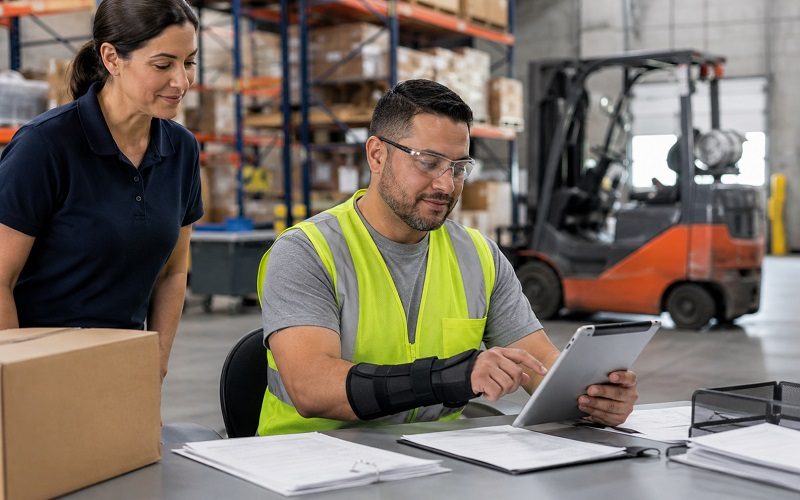
A worker recovering from a forklift accident may be restricted from driving, lifting, climbing, standing for long periods, operating machinery, or working near moving vehicles. A modified position is not suitable merely because the employer calls it “light duty.”
The employee should keep written work offers, medical reports, job descriptions, and messages about assigned duties. The actual work must remain within the physician’s restrictions throughout the shift.
California DWC advises injured workers to obtain emergency treatment when needed, report that the injury is job-related, and complete the workers’ compensation claim process. The agency also states that employer-paid medical care may be available even when the employee does not miss work.
When Another Company May Share Responsibility
The employer may operate the warehouse while another company owns, leases, repairs, or maintains the forklift. A manufacturer, rental company, maintenance contractor, loading company, property owner, or commercial driver may have contributed to the accident.
A forklift accident lawyer can review rental agreements, service contracts, purchase records, equipment manuals, repair history, loading procedures, and site-control documents. California Labor Code §3852 preserves an employee’s right to pursue damages against a responsible person or company other than the employer.
Workers’ compensation and a third-party claim should be coordinated because medical expenses, disability benefits, reimbursement rights, and settlement decisions may overlap.
Speak With a Forklift Injury Attorney
California Workers Comp Law Firm can review the accident report, surveillance footage, operator training, inspection records, maintenance history, medical evidence, work restrictions, and insurance decisions.
Request a case evaluation to discuss the accident and identify the equipment, records, and witness information that should be preserved.
Important Resources
- California sets operating rules for industrial trucks, including shift inspections, load handling, speed, visibility, and pedestrian safety. California Code of Regulations, Title 8, §3650
- California requires powered industrial truck operators to complete appropriate training and workplace evaluations. California Code of Regulations, Title 8, §3668
- California requires trailers and trucks at loading docks to be secured against unintended movement. California Code of Regulations, Title 8, §3336
- California sets safety requirements when lift trucks are used to elevate employees. California Code of Regulations, Title 8, §3657
- Employers must provide treatment reasonably required to cure or relieve a compensable workplace injury. California Labor Code §4600
- California preserves an employee’s right to pursue a responsible third party. California Labor Code §3852
- California DWC explains emergency care, injury reporting, claim forms, and workers’ compensation rights. Guidance for Injured Workers
Reviewed by Attorney Mak
Workers’ Compensation Attorney
Attorney Mak reviews workers’ compensation content for California Workers Comp Law Firm. The firm assists California employees with forklift accidents, denied benefits, third-party liability issues, and other work-related injury matters.
Get A Free Consltation
Fill out the form below and one of our injury specialists will contact you shortly

