
Factory Work Injuries Lawyer for
Workers
Factory Workers
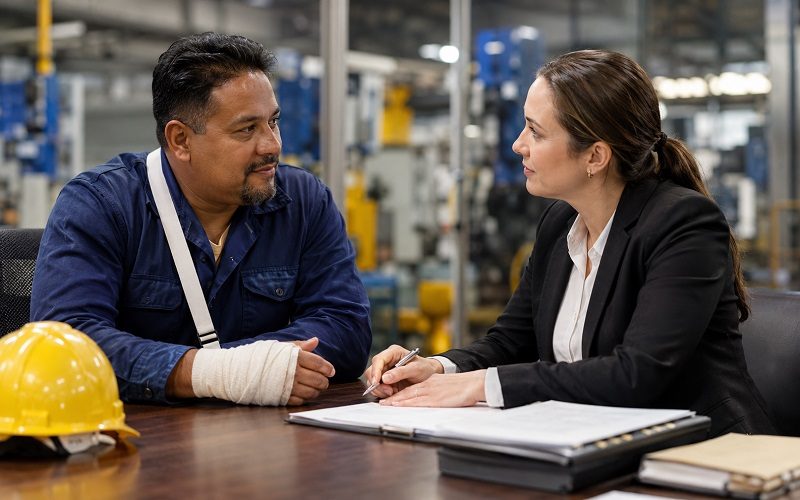
Factory injuries often happen during an ordinary production run. A press cycles unexpectedly, a conveyor catches clothing, a forklift enters a pedestrian lane, or a worker is told to clear a jam before the equipment is fully shut down. By the time the employee returns from medical treatment, the line may be operating again and the condition that caused the accident may no longer be visible.
A factory work injuries lawyer reviews the machine, the task, the safety procedures, and the medical record before important evidence disappears. California Workers Comp Law Firm assists employees injured by presses, conveyors, forklifts, cutting tools, chemicals, heat, falling materials, and repetitive production work.
The Scene Can Change Before You Return
A factory accident should be documented as soon as possible. Photographs can show the machine, control panel, emergency stop, missing guard, leaking hose, damaged floor, warning labels, and the worker’s position. Clothing, gloves, tools, broken parts, and protective equipment may also help explain how the injury occurred.
Inspection sheets, maintenance logs, repair requests, surveillance footage, training records, and witness names should be preserved. These materials may show that a machine had been jamming, shaking, leaking, or stopping unexpectedly before someone was hurt.
California requires hazardous moving machinery to be guarded when the machine’s frame or location does not already protect workers. The rule covers hazards created by cutting, pressing, squeezing, rolling, mixing, and similar movements.
California’s hazardous-energy rule also applies during cleaning, servicing, setup, adjustment, and unjamming when an unexpected startup or release of stored energy could cause an injury.
What Went Wrong on the Production Line?
The phrase “factory accident” does not explain how an employee was injured. A worker may be pulled into a conveyor, struck by a robotic arm, trapped between materials, cut by a blade, burned by steam, or hit by a forklift.
The investigation should identify the exact task, operating speed, guard position, control location, production pace, and instructions given before the incident. When the harm causes permanent loss of function or independence, the claim may also require the long-term evidence used in a catastrophic injury case.
An Industrial Accident Lawyer may examine whether supervisors knew about earlier malfunctions, whether workers were trained to stop the line safely, and whether production demands encouraged employees to bypass a guard or reach into active machinery.
Injuries That Build Over Time
Not every factory injury results from one sudden event. California Labor Code §3208.1 recognizes specific injuries caused by one incident or exposure and cumulative injuries caused by repetitive traumatic activities over time.
A fracture, chemical splash, or forklift collision may have a clear date. Shoulder, back, knee, hand, or wrist conditions may develop through months of lifting, gripping, pushing, vibration, awkward posture, or repeated overhead work.
A cumulative injury claim should describe shift length, production quotas, task rotation, force, weight handled, and when symptoms began interfering with the job. Employees experiencing numbness, tingling, or reduced grip may also need evidence specific to Carpal Tunnel Syndrome.
Medical Records Should Describe the Work
A diagnosis alone does not explain why the job caused an injury. The first medical history should identify the machine or production task, every affected body part, and whether the employee was trapped, struck, crushed, cut, burned, shocked, or thrown.
Factory accidents can cause fractures, amputations, nerve damage, deep wounds, head trauma, burns, and permanent loss of function. California Labor Code §4600 requires employers to provide treatment reasonably necessary to cure or relieve the effects of a compensable workplace injury.
The medical report should connect imaging, medication, therapy, specialist care, surgery, or assistive equipment to the diagnosis. It should also explain restrictions involving standing, lifting, gripping, climbing, operating controls, or repetitive movement.
When Chemicals, Heat, or Fumes Are Involved

Factories may use acids, solvents, cleaning products, adhesives, coatings, heated liquids, and steam. These substances can injure the skin, eyes, or respiratory system through direct contact or inhalation.
The record should identify the product, concentration, route and length of exposure, ventilation, protective equipment, and first response. Labels, safety data sheets, contaminated clothing, photographs, and medical reports can help connect the substance to the injury.
Employees exposed to corrosive products may need documentation specific to a chemical burn injury. Heat, flames, steam, and electrical events can also cause deep tissue damage, scarring, or restrictions that continue after the visible injury starts to heal.
Benefits and Modified Work After an Injury
California workers’ compensation may provide medical care, temporary disability payments during qualifying wage loss, permanent disability benefits for lasting impairment, and supplemental job displacement benefits for eligible workers who cannot return to their former occupation.
An injured employee should report the accident promptly and keep the DWC-1 claim form, medical reports, wage records, restrictions, benefit notices, and written job offers. California DWC states that an employer must provide or mail a claim form within one working day after learning about a workplace injury or illness.
Modified work must match the doctor’s restrictions in practice. A position is not suitable simply because it is called “light duty” when it still requires machine operation, repeated gripping, lifting, chemical contact, or standing next to an active production line.
Could Another Company Be Responsible?
The employer may own the factory while another business designed, manufactured, installed, leased, or maintained the machinery. A staffing agency, delivery company, equipment supplier, or outside contractor may also control part of the work that led to the accident.
California Labor Code §3852 preserves an employee’s right to pursue a responsible party other than the employer. An Industrial Accident Lawyer can review purchase records, service contracts, operating manuals, warning labels, and previous failure reports to determine whether a third-party investigation may be appropriate.
Speak With a Factory Work Injuries Lawyer
California Workers Comp Law Firm can review the accident report, medical records, machine history, safety procedures, work restrictions, and insurance decisions. Early review creates time to preserve equipment, request surveillance footage, locate witnesses, and identify each company that may have controlled the hazard.
Request a case evaluation to discuss the factory accident, available benefits, and the evidence that should be protected.
Important Resources
- California requires employers to establish and maintain an effective workplace injury and illness prevention program. California Code of Regulations, Title 8, §3203
- California requires hazardous moving machinery and equipment to be guarded. California Code of Regulations, Title 8, §4002
- California regulates unexpected startup and stored energy during equipment servicing, setup, adjustment, and repair. California Code of Regulations, Title 8, §3314
- California defines specific and cumulative workplace injuries. California Labor Code §3208.1
- Employers must provide treatment reasonably required to cure or relieve a compensable injury. California Labor Code §4600
- California preserves an employee’s right to pursue a responsible party other than the employer. California Labor Code §3852
Reviewed by Attorney Mak
Workers’ Compensation Attorney
Attorney Mak reviews workers’ compensation content for California Workers Comp Law Firm. The firm assists California employees with factory accidents, machinery injuries, denied benefits, cumulative trauma, and other work-related injury matters.
Get A Free Consltation
Fill out the form below and one of our injury specialists will contact you shortly

