
Workplace Injury Lawyer in California
Workplace Injury Lawyer
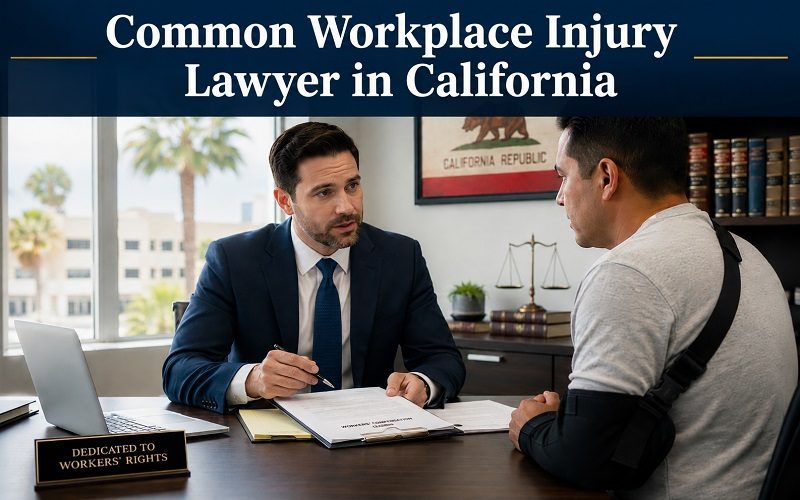
Most job injuries do not begin with a perfectly organized record. One worker may leave the scene in an ambulance after a fall, while another may notice shoulder pain that becomes impossible to ignore after months of lifting. In either situation, the claim depends on more than simply saying, “I was hurt at work.”
A Workplace Injury Lawyer examines how the job was performed, when symptoms appeared, what the medical records show, and whether the employer and claims administrator followed California’s process. California Workers Comp Law Firm assists employees when medical treatment, wage benefits, work restrictions, or a return to regular duties becomes disputed.
The First Version of Events Carries Weight
The description given to a supervisor, doctor, or claims administrator often becomes the starting point for the claim file. It should explain what the employee was doing, what changed physically, and which parts of the body were affected.
A warehouse employee should not report only “back pain” when the shift involved repeated lifting from floor level. A nurse should explain the patient transfer that strained the shoulder. A cashier with hand symptoms should describe scanning speed, wrist position, and the number of hours spent repeating the same movement.
California’s Division of Workers’ Compensation advises employees to report an injury promptly. When a condition develops gradually, it should be reported as soon as the employee learns or believes that the job caused it. Failing to report an injury within 30 days can place benefits at risk, although the outcome depends on the facts and applicable statutory exceptions.
Not Every Injury Has a Single Date
California Labor Code §3208.1 recognizes specific and cumulative injuries. A specific injury results from one incident or exposure, while a cumulative injury develops through repetitive traumatic activities extending over time.
That distinction appears in ordinary workplaces. A forklift collision may cause an immediate fracture, while repeated lifting can gradually damage the back. Typing, gripping, vibration, kneeling, noise, and chemical contact may also produce a condition without one dramatic event.
Employees experiencing repetitive hand symptoms may need evidence specific to a carpal tunnel injury at work. Workers who repeatedly handle hazardous substances may need to document a broader history of asbestos or chemical exposure.
A work injury lawyer can build a clear timeline when the employee cannot identify one precise moment of injury. Work schedules, job descriptions, production records, earlier complaints, and medical opinions can help show what the body was required to do over time.
The Medical Record Must Match the Job
A diagnosis does not automatically explain why a condition is work-related. The treating physician needs an accurate account of the tasks, force, repetition, posture, equipment, and hours involved.
Medical records should also identify every affected area. An employee who falls may initially focus on a painful knee and overlook developing wrist or back symptoms. Leaving those complaints undocumented can create a dispute when the worker later needs treatment for another part of the body.
California Labor Code §4600 requires an employer to provide medical treatment reasonably necessary to cure or relieve the effects of a compensable injury. Depending on the medical evidence, care may include examinations, imaging, medication, therapy, specialist visits, injections, surgery, medical equipment, and follow-up services.
An insurer may argue that age, an earlier injury, or an activity outside work caused the condition. When an existing medical problem is involved, the evidence may need to show whether employment aggravated a pre-existing condition rather than creating an entirely new diagnosis.
The Claim Form Creates a Formal Record
After receiving notice or knowledge of an injury that causes lost time beyond the employee’s shift or requires medical treatment beyond first aid, an employer must provide or mail a DWC-1 claim form within one working day.
The employee should complete the worker section carefully, return the form promptly, and keep a dated copy. If several body parts were affected, each should be included. When symptoms developed gradually, the description should reflect the repeated work instead of inventing a single accident date.
The California DWC also advises employees to describe the injury completely and retain copies of the completed claim form and related records.
Benefits Follow the Evidence

California workers’ compensation can provide medical care, temporary disability payments during qualifying wage loss, permanent disability benefits for lasting impairment, supplemental job displacement benefits in eligible cases, and death benefits for qualifying dependents.
Each benefit depends on its own evidence. Doctors document work capacity and permanent impairment. Wage records affect disability calculations. Treatment requests are reviewed within the workers’ compensation system, and disagreements may arise over medical necessity, causation, or the duration of benefits.
A work injury lawyer can organize these separate issues so that a dispute over one benefit does not obscure the employee’s need for treatment, wage replacement, or support after a lasting disability.
A Job Offer Is Not Automatically Suitable
Returning to work is where medical language meets workplace reality. A restriction such as “no lifting over 15 pounds” matters only when the offered duties remain within that limit. The same principle applies to standing, climbing, overhead activity, repetitive motion, driving, or exposure to noise and chemicals.
California DWC explains that a treating doctor reports on the employee’s ability to work and that an employer may offer regular, modified, or alternative duties based on that report.
The employee should preserve the written offer and compare the actual tasks with the medical restrictions. A different job title does not make unsuitable work medically appropriate. When assigned duties exceed the restrictions, the worker should document the tasks and report the problem instead of relying only on verbal conversations.
When the Insurer’s File Tells a Different Story
A claim may be challenged even when the worker is genuinely injured. The insurer may question when symptoms began, whether notice was timely, whether treatment is related to employment, or whether the employee can return to regular duties.
The necessary evidence depends on the incident. A forklift case may require maintenance records and witness statements. A delivery employee injured in a collision may need route information and crash evidence. A construction injury may involve several companies controlling different parts of the site.
Serious workplace burn injuries may require photographs, safety reports, medical records, and evidence showing how the exposure or accident occurred.
Legal review can identify what is missing and help preserve records before evidence disappears. The goal is to make sure the claim decision reflects the employee’s actual duties, medical findings, work restrictions, and documented losses.
An Outside Company May Also Be Involved
Workers’ compensation is not always the only legal issue. A defective machine, negligent driver, unsafe property owner, or outside contractor may contribute to an injury that occurs during employment.
A possible third-party claim involves different legal standards, damages, and insurance coverage. It should be coordinated with the workers’ compensation matter because medical payments, benefit payments, reimbursement rights, and settlement decisions may overlap.
Speak With a Workplace Injury Lawyer
California Workers Comp Law Firm can review the incident, DWC-1 claim form, medical record, work restrictions, benefit notices, modified-duty offer, and available evidence. The firm assists California employees with sudden accidents, cumulative injuries, denied benefits, and other disputes arising from work-related harm.
Contact California Workers Comp Law Firm to request a case evaluation and discuss what happened, what the insurance carrier decided, and which records should be preserved next.
Important Resources
- California defines specific and cumulative workplace injuries. California Labor Code §3208.1 (Leginfo)
- Written notice of a work injury is generally required within 30 days, subject to statutory exceptions. California Labor Code §5400 (Leginfo)
- Employers must provide or mail a claim form within one working day after learning of a qualifying injury. California Labor Code §5401 (Leginfo)
- Employers must provide treatment reasonably required to cure or relieve a compensable injury. California Labor Code §4600 (Leginfo)
- California DWC summarizes the benefits available through workers’ compensation. Workers’ Compensation Benefits (CalDIR)
- California DWC explains how medical reports affect regular, modified, or alternative work. Return-to-Work Guidance (CalDIR)
Reviewed by Attorney Mak
Workers’ Compensation Attorney
Attorney Mak reviews workers’ compensation content for California Workers Comp Law Firm. The firm assists California employees with workplace injury claims, denied benefits, cumulative trauma, and other work-related injury matters.
Get A Free Consltation
Fill out the form below and one of our injury specialists will contact you shortly

